Bike tools for maintenance and workshop


Starting at £52.20
£30.70

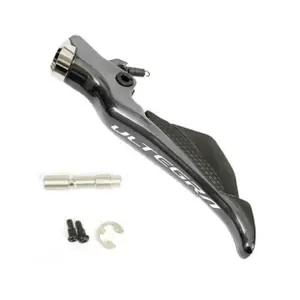




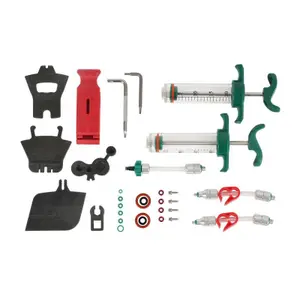


The bike tools gathered here cover every maintenance operation: removing a cassette or bottom bracket, shortening a chain, extracting a crank, tightening to the correct torque, preparing a frame. A specific tool only fits a certain standard: first identify the part to be removed, its brand and type of splines or threads, then choose the tool that matches it.
Which bike tools for which operations?
A bike tool is chosen based on the action it enables, not its appearance. Generic wrenches, hex keys, Torx or flat, are enough for most adjustments; once you need to remove a tightly fitted part, a specific tool becomes essential. Here’s how the tools are organised on this page.
- Drivetrain: chain tools shorten, open and close the chain; cassette tools remove the sprockets for cleaning or changing the gearing.
- Pedalling: bottom bracket tools unscrew the cups or drive out the bearings, and pedal and crank tools extract the cranks and release stuck pedals.
- Wheels: freewheel and wheel tools dismantle threaded freewheels and change a freehub body.
- Steering and frame: steering tools install the star or cup, and frame tools mill, ream and check alignment.
- Torque and repairs: hex and torque wrenches tighten to the right torque, multi-tools travel in a pouch, tool kits gather the essentials, and specialised tools deal with brakes, suspensions and tyres.
The standard to check before buying a specific tool
Most buying mistakes stem from a poorly identified standard. The cassette nuts Shimano and Sram have 12 splines about 23.4 mm in diameter, while those of Campagnolo have 12 splines of about 22.8 mm: the tool for one doesn’t properly fit the other. A threaded freewheel, found on older bikes, entry-level models, and many electric bikes, is removed with a brand-specific spline or notch tool.
On the bottom bracket side, a BSA threaded shell (1.37 inches on 24 threads) has its threaded side to the left; the Italian thread (36 mm on 24 threads) screws in to the right on both sides, and the T47 adopts a 47 mm thread with a 1 mm pitch. External cups with 16 notches come in various diameters, from about 39 to 50 mm depending on the model, while a press-fit bottom bracket is removed with a bearing puller and reassembled with a press. For cranks, the extractor's tip differs between square and splined Octalink or ISIS axes.
Basic tools or complete workshop: where to start?
To maintain your bike at home, a basic set is enough: a set of hex keys from 2 to 10 mm, a Torx T25, two tyre levers, a chain tool suited to the number of gears, and a pedal wrench. Next, come the tools that track drivetrain wear, cassette removers and chain whips, crank extractors and bottom bracket wrenches, then a torque wrench as soon as the bike features carbon parts.
Professional tools add rare but delicate operations: milling and tapping bottom brackets and head tubes, installing cups with a press, cutting and preparing the fork steerer, centring and tensioning wheels. These tools pay for themselves on many bikes; for a one-off job, it’s better to head to a workshop.
Tightening to the correct torque without damaging parts
A screw that is too tight can split a carbon handlebar, while one that is too loose allows a seatpost to slip. Manufacturers indicate a torque in newton-metres on the part or in the manual: a small-range torque wrench, from 2 to 10 Nm or 4 to 20 Nm, covers most screws on the cockpit and seat, while a larger wrench handles cassettes, bottom brackets and wheel axles. Click-type wrenches signal the achieved torque with a click, while fixed-torque models avoid any adjustment.
Tools dedicated to electric bikes
An electric bike disassembles with the usual tools for most of its components, but its motor requires its own: the ring holding the chainring on the motor axle and some fixings have a profile specific to each motor manufacturer. Choose the tool based on the brand and model of the motor, Bosch, Yamaha, Brose, or Bafang, and not based on the bike brand.
Working in good conditions
A stable bike, with the wheels off the ground, makes every adjustment more precise: a workstand holds the frame at a working height, and bike supports store it against the wall or on the floor. What has just been removed is stored in foam and toolboxes designed to keep everything in place. Find all maintenance sections from the workshop.
Which bike tool brands to choose?
Shimano issues tools for its own components identifiable by their reference TL: bottom bracket and locking ring wrenches, chain tools suited to the number of gears, derailleur adjustment tools, or bleed kits for its hydraulic disc brakes.
Cyclus, a German brand of tools designed for professional workshops, has built its snap.in system around a unique tool holder that receives interchangeable bits; its range covers T47 bottom bracket taps, facing cutters, and tools for locking nut of Bosch, Yamaha or Bafang motors.
Var, a French tool manufacturer from Chartres, outfits the workshop from end to end, from chain tools to cup presses, right up to frame and fork alignment checkers and professional workshop kits.
Super B, a Taiwanese bike tool manufacturer, offers a Classic line for home maintenance and a Premium line for workshops, including a cutter for disc brake mounts; it’s also known for steerer cutters, wheel truing gauges, and vises.
Topeak, a Taiwanese brand known for its compact tools, includes the Alien III multi-tool, Torq Stick torque wrenches, and the Pro Prepstation, a rolling workshop cart filled with dozens of tools.
Bike tools on promotion
A replaced reference or an end of line is enough for a tool to join the clearance, to check before equipping a workspace; tools newly added to the catalogue appear in the new arrivals. Winter, a quiet time for rides, is a good opportunity to expand your tools, especially during Black Friday and sales.
Frequently asked questions
What tools do I need to maintain my bike myself?
A set of hex keys, a Torx T25, tyre levers, a chain tool, and a pedal wrench cover the essentials for common adjustments and repairs. Add a cassette remover with its whip and a crank extractor for drivetrain maintenance, then a torque wrench if your bike has carbon parts.
Is a Shimano cassette remover suitable for a Sram or Campagnolo cassette?
For Sram, yes: the cassette nuts share the same profile with 12 splines. For Campagnolo, no: the profile is similar but with a slightly smaller diameter, and the Shimano tool does not fit properly. Tools compatible with both brands are specified in their name.
How do I know which bottom bracket tool to buy?
First, identify the bottom bracket: threaded (BSA, Italian, T47) or press-fit, then the cup model, often engraved on the part. An external cup unscrews with a 16-notch wrench of the correct diameter, a cartridge bottom bracket with a spline socket, and a press-fit with a bearing puller and press.
Is a torque wrench useful on an aluminium bike?
Yes, even though it is essential for carbon. An aluminium stem or seat clamp that is too tight can mark or weaken the part, and poorly tightened screws can come loose. Following the specified torque also protects the threads of the frame and components.
Do electric bikes require special tools?
For brakes, drivetrain, or wheels, the usual tools are suitable, taking into account the width of the tyres and axles. The motor, however, requires tools specific to its manufacturer, especially for the ring that holds the chainring: check the brand and model of the motor before ordering.