Bike brake cables, housing, end caps and stops


Starting at £389.20
£252.98


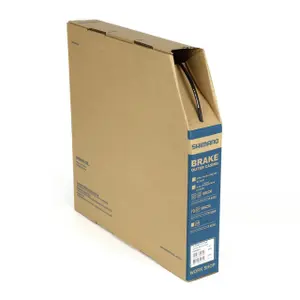

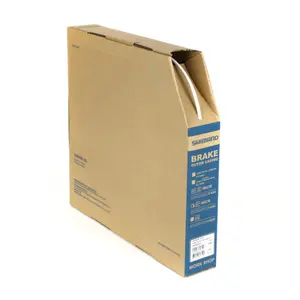
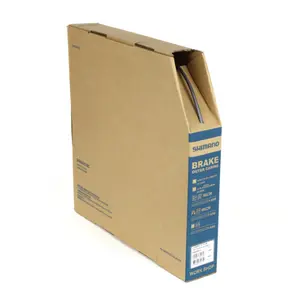


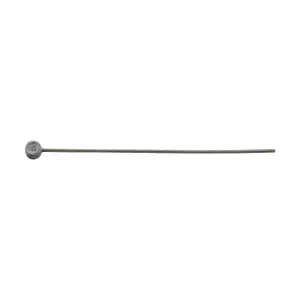
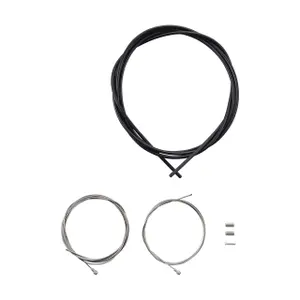
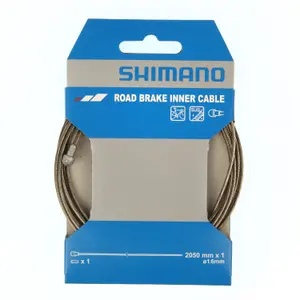
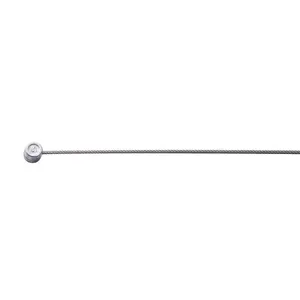
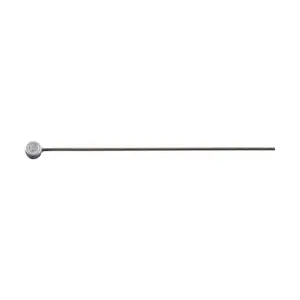
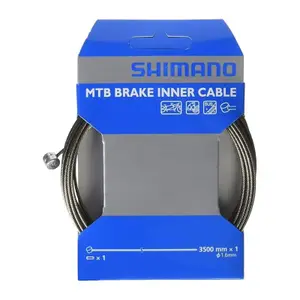


A bike brake cable is chosen first by its nipple, pear-shaped for a road lever, barrel-shaped for a flat bar lever, then by its length, which is greater for the rear brake, a tandem or a cargo bike. It slides inside 5 mm brake housing made of a tightly wound spiral, which is cut to the right length. Single cables or workshop boxes, housing on a roll, end caps and cable stops are all here.
How do a brake cable and housing work?
On a mechanical brake, whether a V-brake, cantilever, road calliper, cable disc brake or drum brake, the lever pulls a steel cable that slides inside housing. The housing, which rests at both ends against the lever and a cable stop on the frame, guides the cable around bends and absorbs the compression force when you brake. Brake housing is made of steel wire wound in a tight spiral, more resistant to crushing than gear housing with lengthwise strands, which must never be used for a brake. Over time, the housing gets dirty, the cable frays or rusts, and braking becomes stiff or imprecise: changing both together restores the lever's original smoothness.
Pear or barrel: the cable nipple for your lever
It is the cable nipple, seated in the lever, that decides compatibility. Road levers and brake/shift levers take a pear-shaped nipple, with a specific version for Campagnolo levers. Flat bar levers, on a mountain bike, hybrid, city bike or child's bike, take a cylindrical barrel nipple. Some so-called universal cables have one nipple of each type, one at each end: the one you do not use is cut off once the cable is adjusted. Drum brakes and some hubs with built-in brakes use complete cables specific to their brand, supplied with their housing and fixing parts.
Galvanised steel, stainless steel, coatings: what changes when braking
At 1.5 or 1.6 mm in diameter, a brake cable is much thicker than a gear cable. Galvanised steel cable remains the basic choice for workshops and everyday bikes; it is more prone to corrosion. Stainless steel cable resists damp and road salt better, a real advantage on a bike that lives outdoors. Polished cables, known as slick, and cables coated with PTFE or polymer reduce friction further: the lever feels lighter and modulation is finer. As for the housing, housing with a Teflon liner, or self-lubricating housing, reduces maintenance by avoiding direct steel-on-steel contact.
Lengths, workshop boxes and housing by the metre
A front brake cable is often between 1 m and 1.7 m long, a rear cable about 2 m; it is cut to length once the brake is adjusted. Tandems, cargo bikes and some e-bikes need longer cables, up to 3 m or more. Boxes of 20, 25 or 100 cables and rolls of housing of 30 or 50 m are designed for workshops, clubs and cyclists who maintain several bikes. To finish the job neatly, allow for housing end caps, which protect its ends, crimp-on cable end caps to prevent fraying, and cable stops or housing stops when the frame has none.
Replacing a bike brake cable without mistakes
Cut the housing with cable cutters, never with ordinary pliers, which crush it, then reopen the end of the liner with a pointed tool. Keep the lengths of the old housing as a template: too short, it pulls on the handlebar when you turn; too long, it forms loops that slow the cable down. Fit an end cap at each end, slide the cable in from the lever, clamp it at the brake after squeezing the lever two or three times to seat the housing and end caps, then adjust the free play with the barrel adjuster. Finally, cut the cable a few centimetres beyond the clamp and crimp on an end cap.
Levers, brakes and other brake parts
A new cable deserves a lever in good condition: brake levers are chosen according to the pull of your brake. For rim brakes, check the rim brake pads every time you change the cable, and brake callipers replace a tired brake. If you are moving to hydraulics, see the complete disc brakes; replacement hoses are among the bike brake parts.
Which brake cable brands should you choose?
Shimano offers stainless steel, PTFE or polymer-coated cables, such as the Dura-Ace BC-9000 road set, paired with pre-lubricated SLR housing, as well as boxes of 100 cables for the workshop.
Sunrace, the Taiwanese group that owns Sturmey-Archer, supplies the complete stainless steel cable for Sturmey-Archer drum brakes, boxed slick galvanised cables and housing stops that screw onto a boss.
Jagwire, a brand dedicated to bike controls, cables, housing and hoses, supplies workshops with its Workshop ranges: boxes of cables with Shimano and Sram or Campagnolo nipples, 50 m rolls of housing and ready-to-fit Elite kits.
Massi, a Spanish bike and components brand based near Barcelona, offers 1.6 mm brake cables, a Teflon version, a box of 100 road cables and a long cable for tandems.
Fibrax, a Welsh braking specialist based in Wrexham and known to BMX riders for its gyro cables, offers Teflon-lined housing on a 30 m roll and a stainless steel cable for tandems.
Transfil, a French maker of control cables that also supplies the car industry, offers slick stainless steel cables with Shimano and Sram nipples, boxed galvanised cables and self-lubricating housing.
Brake cables in the outlet
End-of-line products, workshop boxes and coloured housing regularly move into the brakes outlet, a chance to build up a small stock for the season. Recent products are shown in new arrivals, and the winter sales come at just the right time to get your bikes ready for spring.
Frequently asked questions
What size is a bike brake cable?
Brake cables are usually 1.5 or 1.6 mm in diameter, compared with 1.1 to 1.2 mm for a gear cable. The two are not interchangeable: a gear cable is too thin to withstand the force of hard braking, and its nipple does not fit a brake lever.
Which brake cable for an e-bike?
If the bike has mechanical brakes, it takes the same cables as a conventional bike, often longer because the cable is routed around the battery. Stainless steel is preferable, as it lasts longer in the rain. An e-bike with hydraulic brakes has no brake cable: it is the hose that needs replacing.
Why is my brake cable sticking?
The cable is rubbing inside housing that is dirty, rusty or bent too tightly, or it has frayed inside. A little lubricant can help in the short term, but the lasting solution is to replace both cable and housing, making sure the housing follows gentle curves.
How do you route a cable through a frame with internal routing?
Leave the old housing in place as a guide and slide the new one along its path, or use a magnetic guide wire passed through the tube. Thin housing without a cable is easier to push through than the assembled pair: the cable is then slid inside from the lever.
Can you keep the old housing with a new cable?
It is best avoided: worn housing keeps the dirt and rough spots that damaged the old cable, and a new cable in tired housing soon loses its smoothness. Only keep housing that is recent and clean, when you are replacing a broken or frayed cable.