Bike brake caliper: V-Brake, pad or disc


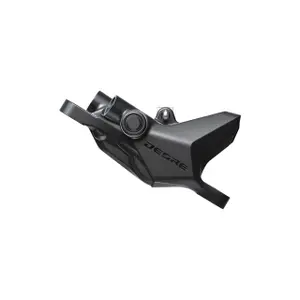
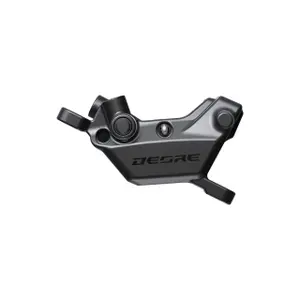
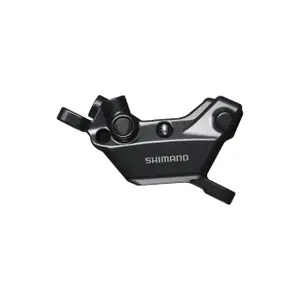

A spare bike brake caliper must match the type of brake, the mounting and the controls of your bike. First, identify your brake: V-Brake or cantilever on hybrid and city bikes, double pivot on road bikes, mechanical or hydraulic disc caliper. Then check the mounting on the frame and compatibility with your levers.
What type of caliper does your bike use?
The caliper is the part of the brake that clamps the rim or disc. Its type depends on the bike:
- V-Brake: two long vertical arms connected by a horizontal cable, found on most hybrids, city bikes, and rim brake mountain bikes.
- Cantilever: two shorter arms, pulled by a triangular cable, used on older touring and cyclo-cross bikes.
- Double pivot: the compact caliper of rim brake road bikes, secured by a central screw or two direct mount screws.
- U-Brake: a low and powerful caliper mounted on some BMX bikes.
- Disc caliper: a fixed body that pushes the pads against the disc, activated by a cable or hydraulic system.
Pads, central screw, Post Mount or Flat Mount: the fixing
V-Brakes and cantilevers mount on lugs welded to the frame and fork; the road caliper mounts on a central screw or two direct mount anchor points. For the disc, Post Mount is common on mountain bikes and city bikes, while Flat Mount is found on recent road and gravel frames, and an adapter sometimes allows easy conversion from one disc diameter to another. Therefore, the caliper is chosen for a precise fitting: check your frame's fitting before ordering.
Cable or hydraulic: compatibility with levers
A cable caliper depends on the cable run pulled by the lever. V-Brakes require long pull levers, like flat levers on mountain and city bikes, while cantilevers and road calipers work with short pull levers. Mechanical disc calipers also exist in road or mountain bike versions. A hydraulic caliper forms a circuit with its lever: it must be from the same brand or marked compatible, and use the same fluid, whether mineral oil or DOT depending on the manufacturer, and should be bled after installation.
When should you replace a brake caliper?
A bent arm after a fall, a broken spring, a disc caliper with leaking or stuck pistons, or damaged fittings justify replacement. A stuck caliper can often be restored by cleaning and adding a drop of lubricant on its pivots, without ever touching the pads or brake shoes. After installation, centre the caliper so that both pads or both shoes work at the same time, and check the tightening to the specified torque.
Brake pads, shoes, discs, and levers
A new caliper works with suitable brake pads or brake shoes, and with brake discs in good condition. Controls can be found among the brake levers, cables among the cables and housings, and complete systems with disc brakes. For a spring, a screw, or a seal, check the braking spare parts; all brake components are gathered on the braking page.
What brands of brake calipers are available?
Alhonga, a Taiwanese brake manufacturer, provides a replacement V-Brake, the most common caliper on hybrids and city bikes.
Tektro offers pairs of road rim calipers R539, R540, and R559, either bolt-on or recessed, along with the Aries MD-M300, a mechanical disc caliper.
Sram sells individual calipers from its Code, G2, and Maven mountain bike brakes, as well as those from its road AXS groups in Flat Mount, in addition to Rival rim calipers.
Shimano covers road and mountain biking: double pivot calipers from Sora to Dura-Ace, four-piston hydraulic calipers XT BR-M8120 and XTR BR-M9120, and the Saint BR-M820 downhill caliper.
Campagnolo offers its double pivot Super Record, Chorus, and Centaur calipers, in central or direct mount fixing, as well as hydraulic calipers supplied with their hose and oil.
Formula sells the Cura Road caliper in Flat Mount for Sram or Campagnolo levers, the Cura X caliper, and o-ring kits to refurbish the Cura 4, RR1, and R1R calipers.
Brake calipers on promotion
Calipers from a renewed range are moving into the brake clearance sale, and new models are included in the new arrivals. Replacing a tired caliper during the winter sales prepares the bike for wet rides.
Frequently asked questions
How do I know which brake caliper to buy?
Take note of the brake type, the fixing on the frame, and the lever type. The reference engraved on the original caliper often helps to find the model or its replacement. For a hydraulic brake, also note the brand of the lever and the fluid used.
Can a stuck brake caliper be repaired?
Often, yes. For a cable brake, clean the pivots, lubricate them lightly, and change the cable and housing if they are rubbing. For a disc brake, clean the pistons and push them back with a plastic tool. If a piston is leaking, the caliper needs to be replaced or refurbished.
Can cantilevers be replaced with V-Brakes?
Yes, both can mount on the same lugs. However, V-Brakes require long pull levers: if your levers are intended for cantilevers, change them too or use a cable pull adapter.
Do both calipers need to be replaced at the same time?
No, a single damaged caliper can be replaced alone. Keeping the same model at the front and rear does provide a more uniform braking experience and simplifies the purchase of wear parts.
Are front and rear calipers different?
On most Post Mount disc brakes, the same caliper is used at the front and rear, only the adapter changes. On the road, rim calipers often differ by the screw length or the mounting location, especially in direct mount, where the rear caliper is sometimes placed under the chainstays.