
Rim brake pads and brake blocks for any rim brake

Starting at £414.58
£290.66
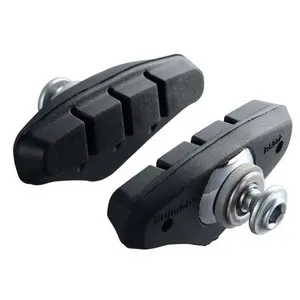

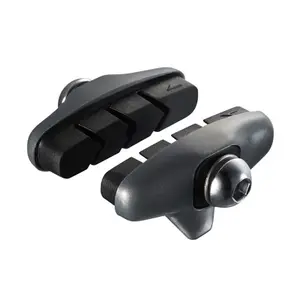

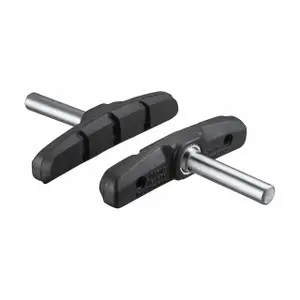
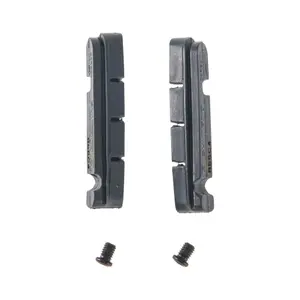
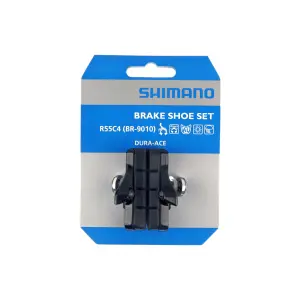
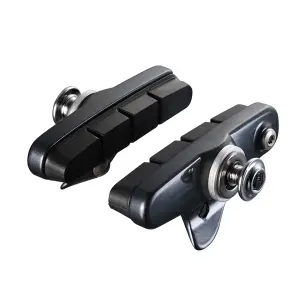
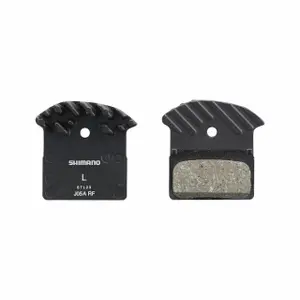
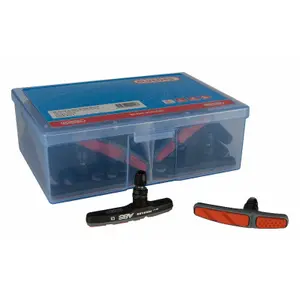
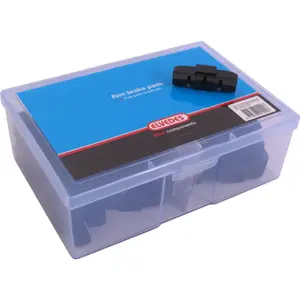
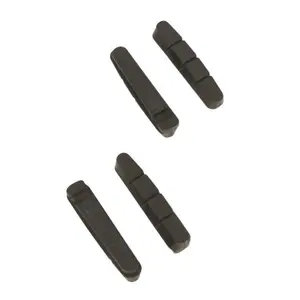
Rim brake pads depend above all on the brake they are fitted to: V-brake, cantilever, road or city calliper, hydraulic rim brake. Then check how they attach, with a threaded post or a smooth post, their length and the material of your rim, aluminium, steel or carbon. Single brake blocks, replacement cartridges, pad holders and workshop boxes for adult, children's and classic bikes are all here.
What does a rim brake pad do, and who needs one?
The pad is the wearing part of a rim brake: when you squeeze the lever, the brake arms press it against the side of the rim, and its compound turns speed into heat. This simple, light braking system is still fitted to a large share of city bikes, hybrids, children's bikes, BMX bikes, road bikes with callipers and most classic bikes. A worn pad lengthens braking distances and ends up scoring the rim: replacing it in time protects the wheel as much as the rider.
Fitting and length: identifying the right brake block
Start by looking at how the pad is held on the brake. V-brakes, road callipers and most recent cantilevers use a threaded post: its set of concave and convex washers lets you angle the pad in every direction before tightening. Older cantilevers often take a smooth post pad, clamped in an eye bolt. Hydraulic rim brakes have their own pads, specific to each model.
The pad length then follows the brake: around 40 mm for a city bike calliper, 55 mm for a road calliper, 60 mm for a BMX, and 70 to 72 mm for a mountain bike or hybrid V-brake. A symmetrical pad fits either left or right, while a directional, or asymmetric, pad carries a side and direction mark. Finally, choose between a one-piece pad, which is replaced entirely, and a cartridge pad holder, where only the insert is replaced.
Aluminium, steel or carbon: a compound for each rim
The compound must suit the surface it rubs against. Aluminium rims, the most common, take standard pads, with versions designed for wet conditions that bite better in the rain. Chrome-plated steel rims, common on older city bikes, brake poorly when wet: specific compounds clearly improve their performance. Carbon rims require a pad designed for them, often the one recommended by the wheel manufacturer, as an ordinary pad gets too hot. A pad that has already rubbed against an aluminium rim must never be used on a carbon wheel, because the metal particles embedded in the compound would score its braking surface.
Fitting and aligning rim brake pads
A directional pad is fitted with the arrow pointing in the direction of wheel rotation. On a cartridge pad holder, the open end faces the back of the bike: when you brake, the rim then pushes the insert against the closed end instead of pulling it out. Do not forget the pin or screw that locks the cartridge.
Then position the pad right in the centre of the braking surface: too high, it wears into the tyre; too low, it rubs against thin air below the rim. Angle it very slightly so that its leading edge makes contact first: squealing usually disappears. Finally, adjust the cable tension so that the lever bites after a short movement, and re-centre the brake with its spring tension screws if one pad rubs.
Cables, levers and other brake parts
New pads will not make up for a sticking cable: replace it along with its housing from our brake cables and housing. A tired brake is replaced in full from our brake callipers, and a lever must have the right pull for your brake, as explained under brake levers. On a disc brake bike, the equivalent wearing part is found among the disc brake pads.
Rim brake pads: the brands on this page
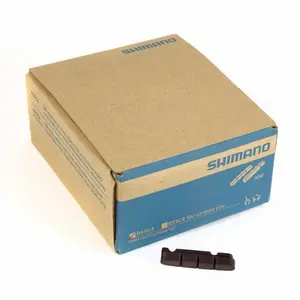
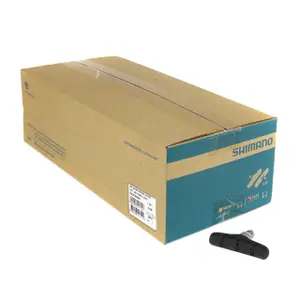
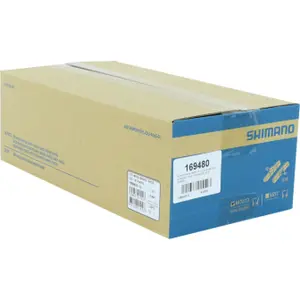
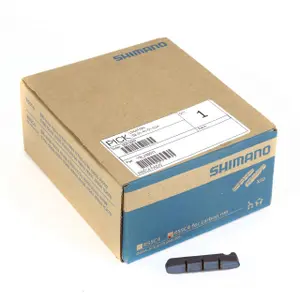
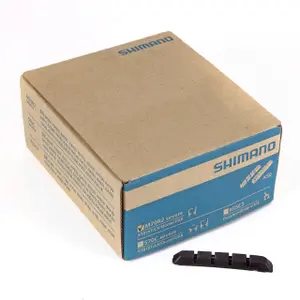
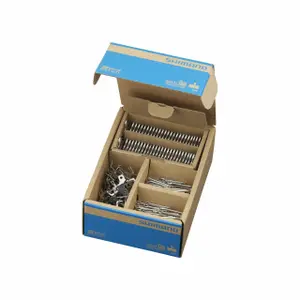
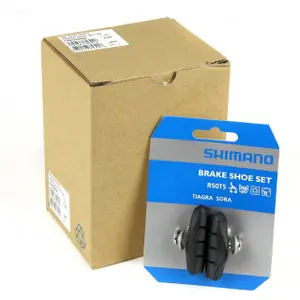
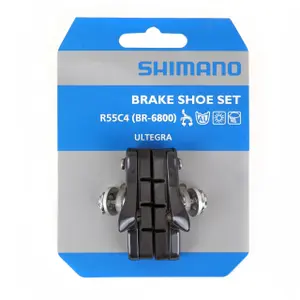
Shimano offers its pads individually and in boxes of 10 or 50 pairs for the workshop, from the R55C4 cartridges for Dura-Ace road callipers to the S65T pads for V-brakes, along with their pad holders and fixings.
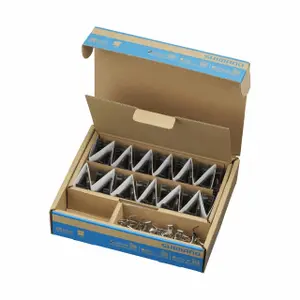
Elvedes, a Dutch supplier of workshop parts, packs its pads in boxes of 25 pairs: symmetrical or asymmetric V-brake pads, cantilever pads, road inserts for Shimano pad holders and replacement pads for Magura HS11 and HS33 hydraulic brakes.
Reynolds, a maker of carbon wheels, recommends its own Cryo pads for its rims, designed together with their braking surface; the Cryo Aero version is offered here for Shimano and Sram callipers.
Fibrax, a Welsh braking specialist, offers 40 mm pad holders for city callipers, with a compound for steel rims in wet weather, and 60 mm pad holders for BMX.
Miche, an Italian components manufacturer that grew out of a family workshop, offers pads for Shimano and Campagnolo callipers, in pairs or in boxes of 40, and a version for carbon rims.
Massi, a Spanish bike manufacturer, supplies replacement pads for Shimano brakes, including versions for the XTR and XT, LX and Deore ranges, as well as threaded post pads.
Rim brake pads in the outlet
Workshop boxes, coloured compounds and replaced products regularly move into the brakes outlet: a good chance to keep a spare pair ready for every bike in the family. The latest arrivals appear in new arrivals, and the seasonal sales and Black Friday come round every year.
Frequently asked questions
Which way round should you fit a brake pad?
Follow the arrow engraved on the pad, which should point in the direction of wheel rotation, and the left or right mark if there is one. For a cartridge, the open end of the pad holder goes towards the back of the bike, otherwise the insert may slide out of its housing when you brake.
Which brake blocks for a classic bike?
Remove the old pad and note its fitting, threaded post or smooth post, and its length, then check the rim material. Many classic bikes have chrome-plated steel rims: a compound designed for them brakes much better in wet weather than a standard pad.
Which brake pads for a child's bike?
Children's bikes generally use V-brakes or callipers similar to adult ones, with pads in the same format. Note the length and fitting of the original pad, and check after fitting that the child can reach and squeeze the lever easily.
Why does my brake pad not move back from the rim?
The pad stays against the rim when the cable is rubbing in its housing, when the spring on one brake arm is too weak or when the pivots are dirty. Clean and grease the pivots, rebalance the springs with the tension screws and replace the cable if it is sticking.
Do you need special brake pads for an e-bike?
If it has rim brakes, an e-bike takes pads in the same format as a conventional bike. Its weight wears the compound faster and heats the rim more: choose quality pads, designed for wet conditions if you ride in all weathers, and check their wear more often.