Bike hand pump and mini pump with pressure gauge
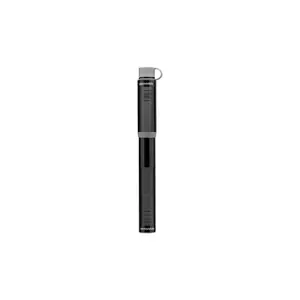


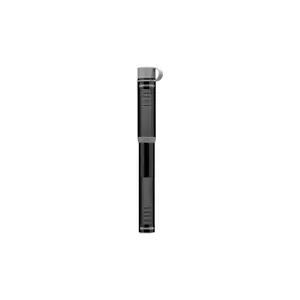




A bike hand pump allows you to fix a puncture far from the workshop and set off again with a properly inflated tyre. Choose it based on your tyres: high pressure for the road, large volume for mountain biking and big gravel tyres, check that it accepts your valves, and then opt for a hose and an integrated gauge to inflate without putting pressure on the valve or guessing the pressure.
Mini pump, folding foot pump or suspension pump?
Under the name hand pump are tools with different roles:
- The mini pump: about 15 to 30 cm, it fits in the back pocket of a jersey or on its frame mount. It's the emergency tool for outings, not for everyday inflation.
- The folding foot pump: a small foot unfolds to rest on the ground and a T-handle allows you to push with both hands, with a hose between the pump and the valve. Bulkier, it tires the arms less.
- The hybrid CO2 pump: a head that also accepts a gas cartridge, to re-inflate in seconds and then top up by hand if the cartridge is empty.
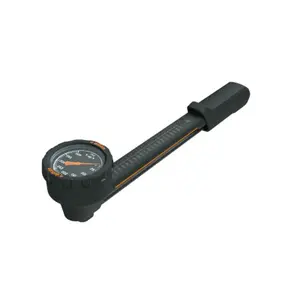
- The suspension pump: small volume, very high pressure and precise manometer, it screws onto the valve of a fork or air shock and is not used for tires.
- The mini electric compressor: rechargeable, it inflates effortlessly, at the cost of keeping a battery charged.
High pressure or large volume: read the specifications of a mini pump
Two numbers sum up a mini pump: the maximum pressure, given in psi or bar (1 bar is about 14.5 psi), and the volume of air delivered with each stroke, sometimes indicated in cubic centimeters. A narrow body achieves high pressure without requiring too much force, which is needed for a road tire of 25 to 32 mm. A wider body moves more air and quickly fills a mountain bike tire but becomes hard to push beyond a few bars. For gravel, check the tire width recommended by the manufacturer: some high-pressure pumps are advised up to about 45 mm.
The maximum pressure advertised is a limit, not a promise of comfort: at high pressure, each stroke requires real effort with a small pump. Models with two modes, large volume then high pressure, switch between the two using a lever or button.
Head, hose and valves: inflate without breaking the valve
The Presta valve, thin, equips most road and gravel bikes; the Schrader valve, the one from cars, is found in mountain biking and urban cycling; the Dunlop valve, on some city bikes, inflates with a Presta head. A reversible or dual-orifice head accepts both main types, and some heads adjust automatically to the valve. When the head attaches directly to the valve, every movement of the pump acts as leverage: a Presta valve can twist or break at the rim. A flexible hose, stored in the body of the pump or screwed to its end, eliminates this risk and allows you to pump in a stable position.
Built-in manometer: know the pressure on the roadside
Without a manometer, the pressure is judged by thumb, and a road tire often seems hard long before reaching the right value. A manometer placed on the hose or on the body of the pump shows where you are, preventing you from returning under-inflated and pinching the tube at the first bump. Its accuracy is that of a small dial: back in the workshop, check the pressure with a foot pump. Suspension pumps always have a manometer and often a button to release pressure in small increments.
Transporting your pump: mount, pocket or bag
Most mini pumps come with a mount that screws under the bottle cage, on the same inserts of the frame. Check the available length, and prefer a model with a cap that protects the head from mud and dust. A longer pump requires fewer strokes, while a very short pump can be forgotten in a pocket or saddlebag: it’s a compromise to choose based on your outings.
Foot pumps, CO2 and spare parts
To inflate at home before each outing, a foot pump is quicker and more precise. The CO2 pumps and cartridges re-inflate in seconds and work well with a mini pump. Heads, seals, fittings and spare mounts can be found in the pump accessories, and everything is gathered in the pumps and accessories section.
Hand pump brands
Lezyne manufacturers the Pocket Drive Pro, a compact pump whose ABS Flex hose screws onto the Presta or Schrader valve and integrates a tool for unscrewing the core; the range comes in HP for road and HV for large tires.
Blackburn offers the Grid 2Stage Anyvalve, a mini pump that switches from a lever from large volume mode to high pressure, with a head that accepts Presta and Schrader valves.
Topeak has equipped its Morph pumps with a folding foot, a T-handle and a hose, turning them into a small foot pump; the G version adds a manometer on the hose.
crankbrothers hides in the Klic a magnetic hose that comes out of the pump body; the HP Gauge version features a manometer, targets tires up to about 45 mm, and is available with a CO2 inflater, while the Klic HV is aimed at mountain bike tires.
Hand pumps on sale
Models replaced in catalogs go to the clearance, and newly referenced pumps appear in the new arrivals. One pump per bike in the family: Black Friday is a great time for that.
Frequently asked questions
Can a hand pump replace a foot pump?
In an emergency, yes; for daily use, rarely. Inflating a road tire to high pressure with a mini pump requires many strokes and real effort. A foot pump, with its manometer and large body, does the same job in seconds.
Where to attach a mini pump on the bike?
The most common place is the mount screwed under the bottle cage, on the inserts of the downtube or seat tube. Otherwise, a jersey pocket or saddlebag works for short models. Make sure the pump doesn’t interfere with the bottles or leg movement.
How to avoid damaging a Presta valve while inflating?
Unscrew the small nut completely, keep the pump head well aligned with the valve, and hold the tire with the other hand to keep the head stable. A hose pump minimizes the main risk. Remove the head in a straight motion, without twisting.
Can you inflate a fork with a mini pump?
No. A fork or air shock requires a suspension pump, capable of much higher pressures with low volume and a precise manometer. These pumps are available on this page, alongside mini pumps for tires.
Is a hand pump sufficient for a tubeless tire?
To re-inflate a tubeless tire that has stayed in place on the rim, yes. To reseat it after disassembly, the flow of a mini pump is often insufficient: a CO2 cartridge or a foot pump with a reservoir works more easily.