
Bike foot pump with pressure gauge and tubeless
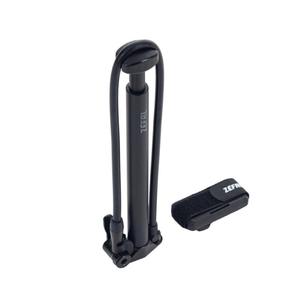
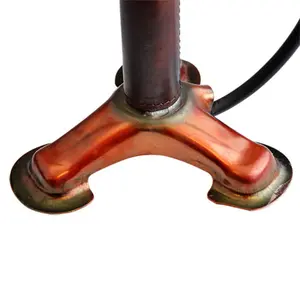

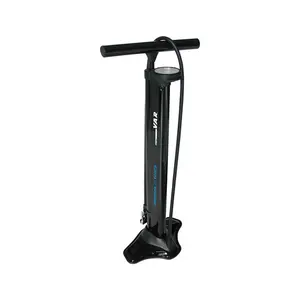
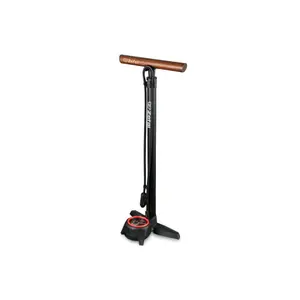
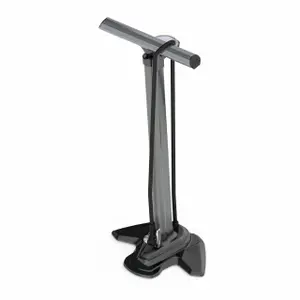
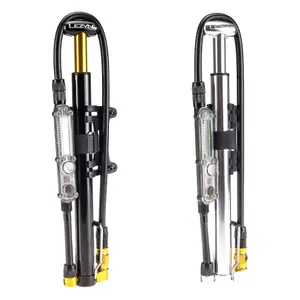
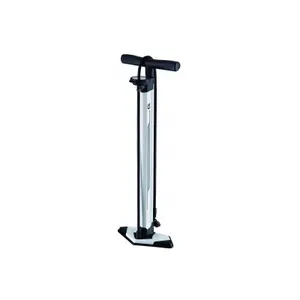
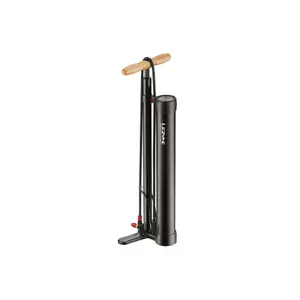
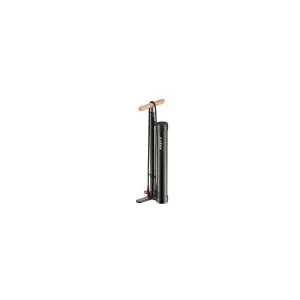
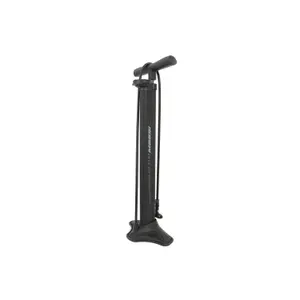
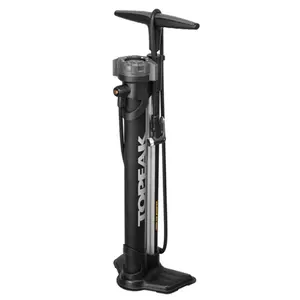

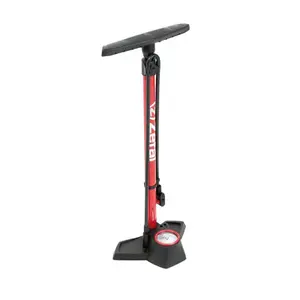
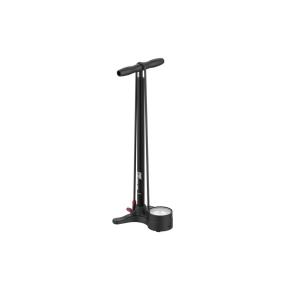
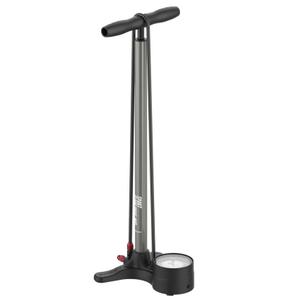
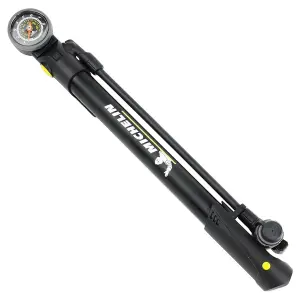

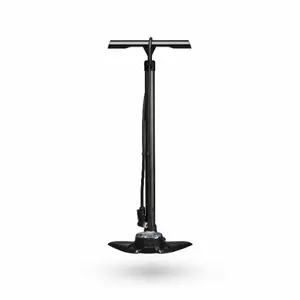
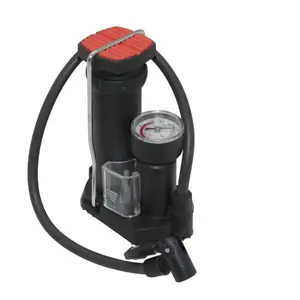

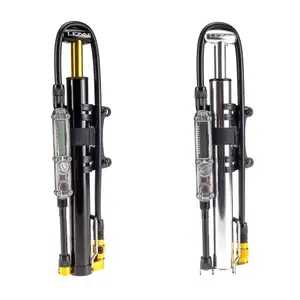
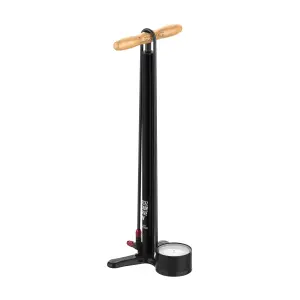
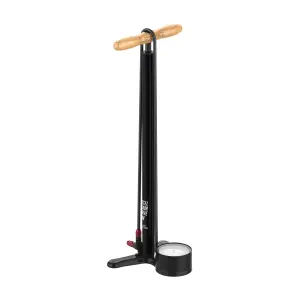
A bike floor pump adjusts the pressure of your tyres just right before each ride, in just a few strokes. Get a narrow barrel for road tyres, a wide barrel for mountain bike tyres, with a gauge that's clear within your inflation range and a head that fits your valves. A tank model also helps when installing a tubeless tyre.
Why keep a foot pump in the workshop?
A tyre slowly deflates even without a puncture, as air gradually passes through the rubber, and a difference of just a few tenths of a bar is enough to change the performance, comfort and risk of pinch flats. A foot pump allows you to check and adjust the pressure in under a minute, standing up, with all your body weight on the handle. Where a mini pump requires dozens of strokes for a road tyre, a foot pump can achieve this in just a few back-and-forths, and its manometer provides a reliable value to carry over from one ride to the next.
Pressure or volume: a pump suitable for your tyres
The diameter of the pump body sets the trade-off. A narrow body reaches 10 to 15 bar without excessive effort, which is what narrow road tyres require. A wide body pumps a lot of air with each stroke but caps out lower: it's the tool for mountain biking and large gravel tyres, inflated to 1.5 or 2 bar but with a volume that is substantial. Versatile pumps sit between the two and are suitable for a garage that houses several bikes.
Also check the gradation of the manometer: on a dial graduated up to 11 or 15 bar, the low pressures of a mountain bike are hard to read well. A large volume model, more finely graduated, or a digital manometer makes adjustment more precise below 2 bar.
Analog or digital manometer, at the top or the bottom
A manometer placed at the top of the pump, near the handle, can be read without bending down; placed at the base, it is better protected in case the pump falls. A large analog dial can be read at a glance, while a digital display gives a value to the tenth and often several units, psi and bar, at the cost of a battery to replace. In all cases, keep the same pump as a reference: two manometers can display a difference of a few tenths.
Head, hose and valves: what to check
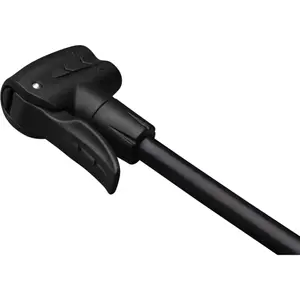
The head must accept your valves. Dual or self-adjusting heads accommodate Presta and Schrader, and thus the Dunlop valve as well, which inflates like a Presta. Lever heads clip on in one motion, while screw-on ones hold better on a short valve or a high-profile rim, without pulling the valve core out when removed. A long hose allows you to inflate a bike resting on a workshop stand or hanging, without moving the pump.
Body, base and handle: what makes a pump last
A body made of steel or aluminium lasts longer than a plastic body, and a wide base, made of metal, prevents the pump from tipping over as the pressure rises. The handle, made of wood, aluminium or soft material, should provide a comfortable grip for both hands. The gaskets and head eventually wear out: check that replacement parts are available for your model, as a quality pump can be repaired rather than it being replaced.
Seating a tubeless tyre with a reservoir pump
To seat the beads of a tubeless tyre against the rim, a sudden burst of air is needed that normal pumping does not provide. Reservoir pumps, or an independent tank connected to the pump, store air under pressure and then release it all at once via a lever or valve. Respect the maximum pressure of the tank as indicated by the manufacturer, and remove the valve core if the tyre struggles to seat: air enters much faster.
Hand pumps, CO2 and spare parts
For a ride, a hand pump or mini pump fits in a pocket or attaches to the frame, while CO2 pumps and cartridges provide assistance effortlessly. Heads, gaskets, hoses and replacement fittings are all grouped in pump accessories, and the entire family in pumps and accessories.
Which brands of foot pumps to choose?
Topeak offers its JoeBlow according to use: the Mountain EX, with an oversized body limited to 60 psi, quickly fills mountain bike tyres, while the Roadie EX goes up to 160 psi for the road and the Urban EX targets city bikes.
SKS manufactures the Airkompressor 10.0 in Germany, with a steel body and large analog manometer, limited to 10 bar; its MV Easy head accepts Schrader, Presta and Dunlop valves without an adapter.
Lezyne builds the Steel Floor Drive around a body and piston made of steel mounted on a machined aluminium base, with a varnished wood handle, an extra-long hose, and an ABS-1 Pro head that screws onto the valve.
crankbrothers stores the hose of its Klic foot pump inside the body, held by a magnet, and places it on a tripod base; it is available with either an analog or digital manometer.
Foot pumps on promotion
Models removed from catalogues go through clearance, and recently arrived pumps are presented in new arrivals. A foot pump is purchased for years: the French Days and Black Friday allow you to aim for a durable model.
Frequently asked questions
One foot pump for a road bike and a mountain bike?
It is possible with a versatile pump with a dual head, which inflates high enough for the road while remaining accurate at low pressure. If you ride a lot on a mountain bike, a digital manometer or a second pump with a large volume will make adjustment more comfortable.
Is the manometer of a foot pump accurate?
It is accurate enough for adjusting your tyres from one ride to the next, but two pumps can show a slight difference. The important thing is to always use the same one to get back to your reference pressures. A separate pressure gauge acts as a referee if you're looking for an exact value.
Why isn't my foot pump inflating anymore?
First, check the valve: the Presta nut may be loose, the core should be in place and not jammed. If air leaks at the head, its gasket is worn or badly suited to the valve. If the piston no longer offers resistance, the body gasket is at fault: it can be replaced on most models.
How to maintain a foot pump?
Store it away from dust, wipe the head after use, and don't let it fall on its manometer. If the piston becomes stiff, disassemble the body according to the instructions and lightly grease the gasket with the grease recommended by the manufacturer.
Can I inflate a car tyre or a ball with a bike foot pump?
A pump with a Schrader head can inflate a car tyre, but slowly, as the volume is much larger than that of a bike tyre. For a ball, you need a inflation needle screwed onto the head. Check that the manometer's graduation is suitable for the target pressure.