Bike CO2 pump and 16 or 25 g cartridges


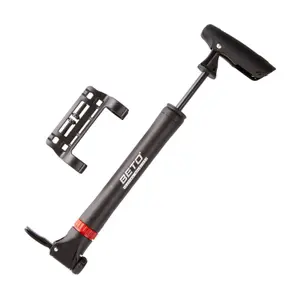
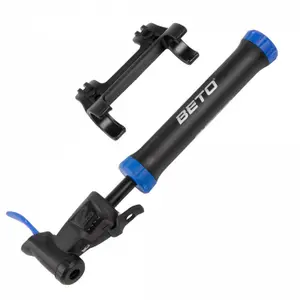
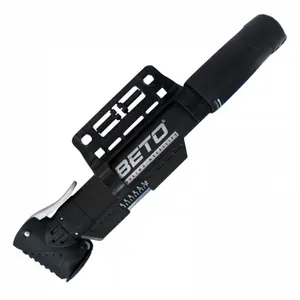
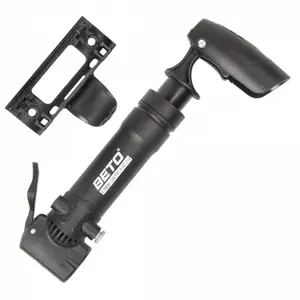
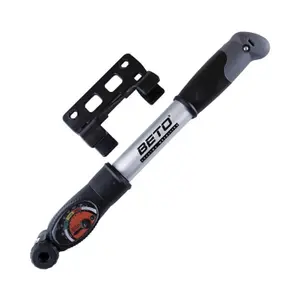

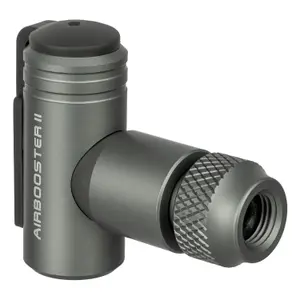



A CO2 bike pump reinflates a tire in a matter of seconds after a puncture, while a mini pump takes several minutes of effort. Choose a head compatible with your valves and capable of dosing the gas, then an appropriate cartridge for the volume of the tire: 16 g for road, 25 g for a mountain bike. Make sure to have a sleeve against the cold and a reinflation with air when back home.
How does a CO2 pump work?
The CO2 inflator consists of a head that fits onto the valve and a small cartridge of compressed carbon dioxide. By screwing in or pushing the cartridge, a needle punctures its seal; then you just need to open the head for the gas to inflate the tire. The process takes a few seconds, with no effort, making it a great tool for quick outings, races, and cyclists wanting to get back on the road without delay. The cartridge, however, cannot be recharged: once pierced, it gradually loses its gas, even if closed by the head.
16 g, 20 g or 25 g: which cartridge for which tire?
The amount of gas determines the pressure achieved, and it is chosen based on the volume of the tire. A 16 g cartridge is generally enough to reinflate a road tire; a wider gravel or mountain bike tire requires more. For example, a manufacturer states that a 29 x 2.4 inch mountain bike tire reaches about 1.5 bar with a 16 g cartridge, and a little over 2.3 bar with 25 g. The lighter 12 g cartridges are reserved for narrow road tires.
Also check the threading: most heads accept threaded cartridges, while others accept smooth cartridges, and the two are not interchangeable. Some inflators are sold with one or more cartridges, which is handy for a first setup.
Pusher, trigger or dial: dosing the gas
A head without any adjustment empties the cartridge all at once into the tire; it is suitable if you know exactly which cartridge is right for your tire. A push-button head releases gas as long as you press on the valve, while a trigger or dial head allows you to stop at the desired pressure and save the rest for later in the ride. Some models have a pressure gauge, useful for not exceeding the recommended pressure. Finally, check compatibility: many heads accept Presta and Schrader, while others only accept Presta.
Cold, tubeless and re-inflating with air
As it expands, the gas cools the cartridge and head significantly, to the point of potentially freezing your skin: hold it with an insulating sleeve or gloves. CO2 also passes through rubber faster than air, so the tire loses pressure in the hours that follow. Once home, deflate it and reinflate it with a floor pump.
In tubeless setups, the sudden flow of CO2 helps reseat a tire that has come off the rim. However, the cold can sometimes freeze a bit of sealant in the valve: if the core is clogged, clean it before inflating so that the gas can pass freely.
Transporting and recycling your cartridges
One or two cartridges and the head fit into a saddle bag or a jersey pocket, and cartridge holders can be attached to the frame or bottle cage. Once empty, the metal cartridge should be disposed of with metals, according to your local recycling guidelines. Before a flight, check with the airline: compressed gas is among the goods that are regulated for transport.
Hand pumps, floor pumps and accessories
A cartridge doesn’t offer a second chance: many cyclists pair it with a hand pump as a backup. At home, the floor pump is used to reinflate with air after a CO2 repair. For a head, a seal or a replacement nozzle, check the pump accessories; the pumps and accessories section contains the full range.
Three brands of CO2 inflators
Lezyne equips its Control Drive with a dial to adjust the flow and a head that accepts Presta and Schrader valves for 16 or 25 g threaded cartridges; the Trigger Drive releases gas via a trigger.
Peaty's manufactures the head of its Holeshot inflator from aluminium, which releases gas as long as it's pressed onto a Presta valve; it comes in road and gravel versions with 16 g cartridges and in a mountain bike version with 25 g cartridges, along with a closed-bottom silicone sleeve that protects the hand from the cold.
Topeak offers the AirBooster G+, a CO2 inflator equipped with a pressure gauge that is readable from 360 degrees, and the very compact Nano AirBooster series, some versions of which come with a 16 or 25 g cartridge.
CO2 pumps on sale
Inflators from previous collections go through clearance, while new models can be found in new arrivals. The French Days allow you to complete your repair kit before the long ride season.
Frequently asked questions
How many CO2 cartridges should I take on a ride?
Count one cartridge per flat tire possible, so at least two for a long ride, and add a mini pump as a backup: a badly punctured or emptied cartridge can't be reused. For mountain biking, a larger capacity cartridge is needed to reach sufficient pressure.
How to use a CO2 cartridge without wasting it?
Place the head straight on the valve, with the Presta open, before piercing or opening the cartridge. Release the gas in small bursts if the head allows it, checking the firmness of the tire, and close it as soon as the pressure feels sufficient.
Does a CO2 pump work on a Schrader valve?
Only if the head accepts it: many inflators are reversible or compatible with both valves, but some road models only handle the Presta. Check the product details before purchasing.
Why does the tire deflate after inflating with CO2?
Carbon dioxide passes through the rubber of inner tubes and tires faster than air. The loss is noticeable by the next day: deflate the tire and reinflate it with air after the ride.
Can a pierced cartridge be kept?
It slowly loses its gas, around half a gram per month according to one manufacturer, and what remains becomes uncertain. It’s better to empty it at home and set off with a new cartridge.