
Road bike rear lights for day and night
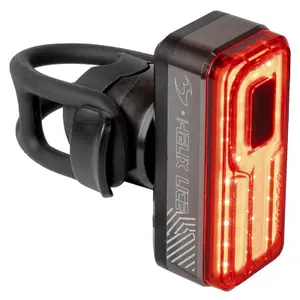
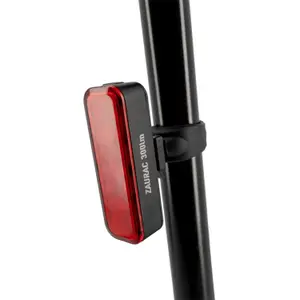
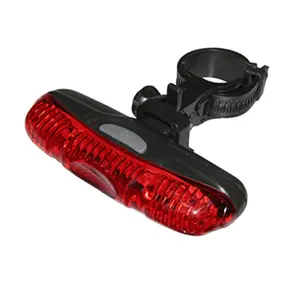
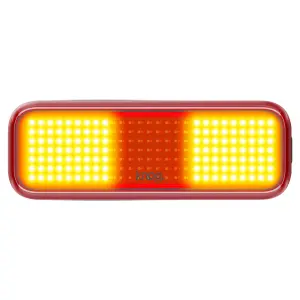
Starting at £18.44
£15.88
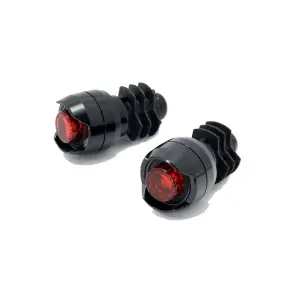
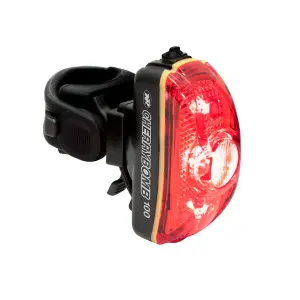

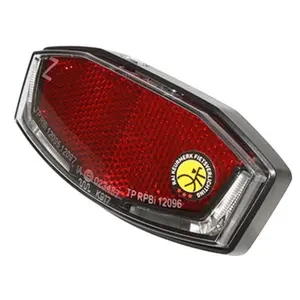
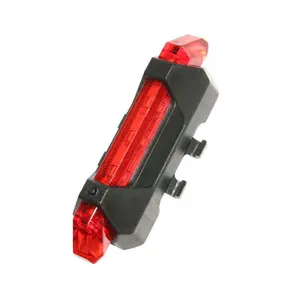
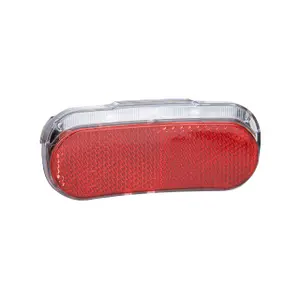
A road bike rear light makes you visible to the cars catching up with you, at night but also in broad daylight, under trees or into a low sun. Choose a rechargeable model bright enough to be spotted from a distance during the day, with a steady mode for night riding, a group mode that does not dazzle the riders behind you and a mount that suits your seatpost.
Why ride with a rear light, even during the day?
On a country road, a car soon catches up with a cyclist and its driver has little time to spot them. A bright flashing light catches the driver's eye well before the rider's silhouette, especially in the shade, in the rain or when the sun is low. At night, a red rear light is required: in the UK, the Highway Code states that your cycle must have white front and red rear lights lit, and in Ireland a red rear light is required during lighting-up time.
Lumens, side visibility and run time
A road rear light offers anything from a few dozen to more than 250 lumens; the most powerful have a flash mode designed for broad daylight. Side visibility matters just as much, for vehicles pulling out of a junction or a roundabout.
Run time varies with the mode, from an hour and a half on maximum power to several dozen hours on a low flash. As for waterproofing, IPX4 resists splashes and IPX7 temporary immersion.
Riding in a group without dazzling
In a bunch, a 200-lumen flash a metre from your face quickly tires the rider behind. Several manufacturers provide a group mode, steady and less intense. The usual practice is for the last rider in the group to keep a highly visible mode, while the others switch to group mode or a low steady mode.
Brake light, radar and aero seatpost
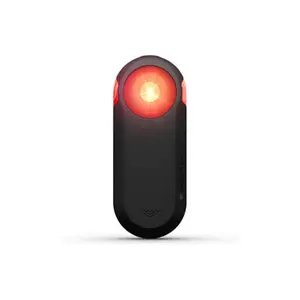
Some lights have a built-in accelerometer: when the bike slows down, they switch for a few seconds to a brighter steady beam, like a brake light. Others pair the light with a radar that shows vehicles approaching from behind on a compatible bike computer.
An aero seatpost, with its teardrop profile, needs a suitable strap, often supplied with road lights. Some lights also fit a quarter-turn mount, like those used for bike computers.
Front lights and other bikes
The rear light goes with a front light, to see and be seen from the front: all front and rear models are brought together in road bike lights. For gravel and rides that mix tracks and quiet lanes, the gravel rear lights also include dynamo lights and models for pannier racks.
Which rear light brand should you choose?
Moon packs up to 100 lumens, a USB-C rechargeable battery and IPX7 waterproofing into the 30 g of its Helix Lite, with a seatpost mount compatible with Garmin-type bases; the more discreet Alcor attaches with a magnetic mount.
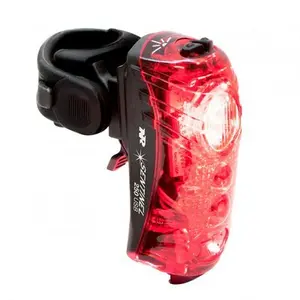
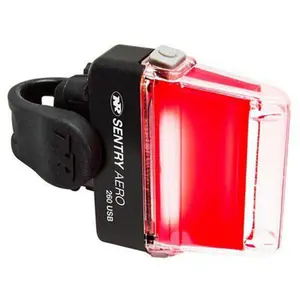
NiteRider designed the Sentry Aero 260 for aero seatposts, with two straps supplied, 260-degree visibility and a group mode; the Sentinel 250 projects two laser lines onto the road that mark out a virtual lane behind the bike.
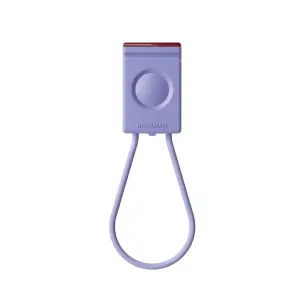
Bookman combines a very bright main LED and two side LEDs on its Block light, in a compact housing available in several colours, held on by a silicone band.
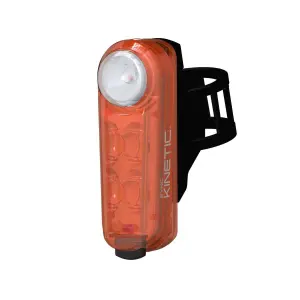
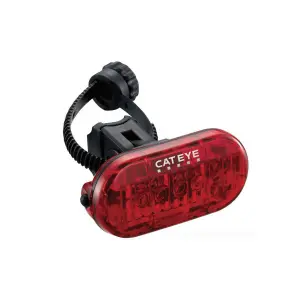
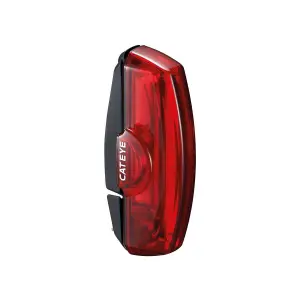
Cateye fits its Sync Kinetic and Rapid X2 Kinetic lights with an accelerometer that intensifies the light when you brake; the Sync Kinetic adds a daytime HyperFlash mode and a mode for group rides, and syncs with the other lights in the Sync range.
Blackburn houses its Dayblazer 65 in a waterproof IP67 aluminium body, with a multi-diameter silicone strap and a 65-lumen daytime flash.
Rear lights on sale
Lights from a renewed range join the road electronics outlet, and recently listed models appear in new arrivals. Black Friday comes just as the days are drawing in.
Frequently asked questions
Should you use your rear light during the day on the road?
The law requires lights at night: in the UK, white front and red rear lights must be lit, and in Ireland lights are required during lighting-up time. Elsewhere, check the rules that apply where you ride. During the day, a bright flashing light is still a real asset on busy roads and in shaded areas, and it is worth leaving it on from the moment you set off until you get home.
Flashing or steady mode: which should you choose?
During the day, a flashing light is more noticeable. At night, the rules differ: in the UK, the Highway Code permits flashing lights, while some countries require a steady rear light. In a group, choose a low-intensity steady mode.
How much run time do you need for a long ride?
Go by the run time of the mode you actually use, with a margin for the cold, which reduces battery capacity. Over several days, carry a cable and a small power bank.
Where should you fit a rear light when you have a saddle bag?
On the loop that most saddle bags provide, with the light pointing backwards rather than at the ground. Otherwise, fit it to a seat stay, or add a light clipped to your clothing as well.
Are brake-sensing rear lights allowed?
The rules on additional lights vary from one country to another, so check those that apply where you ride; in the UK, the Highway Code forbids using lights in a way that dazzles other road users. Brake-sensing lights stay red and simply switch to a brighter steady beam for a few seconds when the bike slows down.