MTB brake rotors, 160 to 220 mm, Center Lock



Starting at £78.68
£69.22


Starting at £59.22
£48.75


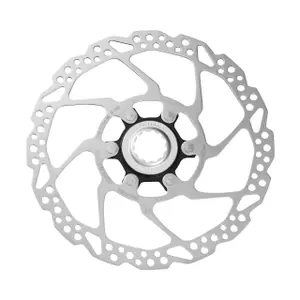


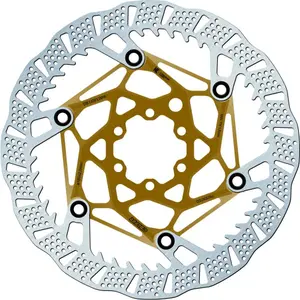


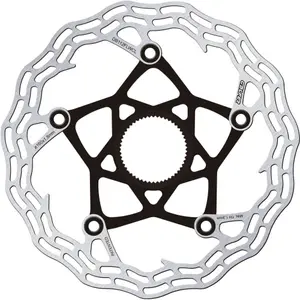
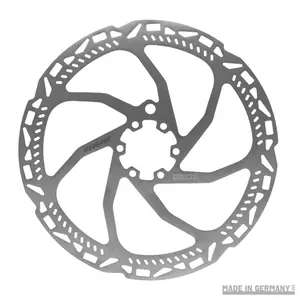
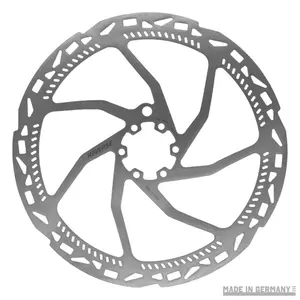


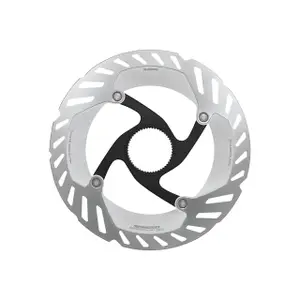
MTB brake rotors are chosen according to how you ride: 160 or 180 mm is enough for cross-country, while 203 or 220 mm becomes essential for enduro, downhill and electric mountain bikes. Then check the hub mounting, Center Lock or 6-bolt, the maximum diameter allowed by the fork and the frame, and the thickness recommended by your brake's manufacturer.
What size MTB rotors do you need for your riding?
Diameter governs power: the bigger the rotor, the further from the hub the pad clamps, and the better the heat is spread. In practice:
- Cross-country and trail touring: 160 mm at the rear, 160 or 180 mm at the front, to keep the set-up light.
- Trail and all-mountain: 180 mm at the rear and 180 or 203 mm at the front, to cope with longer descents.
- Enduro, downhill and e-MTB: 203 or 220 mm, often on both wheels, as weight and speed push temperatures up.
The frame and the fork set a maximum diameter, and any rotor larger than the original one needs a calliper adapter. Watch out for neighbouring sizes: 200 mm is a SRAM size, 203 mm a Shimano size, and the adapters are not the same.
Thickness and e-MTBs: rotors made to run hot
An electric mountain bike descends faster and weighs more: its rotors work longer at high temperature. Manufacturers respond with thicker braking surfaces, around 2 mm, which store heat better and warp less easily. For its STEPS motors, Shimano created an RT-EM series, some models of which, such as the RT-EM810, carry the speed sensor magnet. Before fitting a rotor thicker than the original, check that your calliper takes it without rubbing.
One-piece, floating or sandwich: types of MTB rotors
The one-piece rotor, cut from a single sheet of stainless steel, is simple, strong and affordable. The floating rotor separates the steel braking surface from an aluminium carrier, joined by rivets that let the surface expand without distorting the whole rotor: it saves weight and stays true on long descents. The sandwich rotor adds an aluminium core between two layers of steel, sometimes extended by fins that act as a radiator. The cut-outs in the braking surface clear mud and water and affect noise.
Fitting the rotor to the hub: Center Lock or 6-bolt
A 6-bolt hub takes a bolted rotor, a Center Lock hub a splined rotor held by a lockring, with internal or external splines depending on the tool you have. The bolts are tightened in a star pattern, to the torque stated by the manufacturer. A 6-bolt rotor fits a Center Lock hub with an adapter; the reverse is not possible.
How to clean, bed in and monitor MTB brake rotors
A braking surface contaminated by chain oil or spray lubricant makes braking drop off and causes squealing. Clean it with isopropyl alcohol or a dedicated brake cleaner, on a clean cloth, without touching the surface with your fingers; if the pads have been contaminated, replace them. After fitting a new rotor, bed in the brakes with a series of firm stops from a moderate speed, without locking the wheel. Then regularly check the thickness, look for any cracks and check that the bolts are tight.
Which MTB brake rotor brand should you choose?
Shimano keeps its RT-MT800 and RT-MT905, with an Ice Technologies Freeza sandwich, for mountain biking, alongside simpler Deore and Alivio rotors and the RT-EM series for electric mountain bikes.
Galfer, a Spanish braking specialist also known in motorcycling, cuts its Wave rotors with a wavy edge, and keeps its two-piece Shark Evo for demanding riding.
Elvedes, a Dutch brand of brake parts, offers SX one-piece, FX floating and CRX semi-floating rotors, in 6-bolt or Center Lock, supplied with their bolts.
SRAM offers the HS2, whose 2 mm thick braking surface is built for the long braking of mountain biking.
Clarks Cycle Systems, based in Tamworth, England, offers the CFR-02, a floating rotor with an aluminium carrier, and the CFR-05 in 203 mm.
Swissstop, a Swiss brand from Mendrisio known for its disc pads and rim brake pads, designs its Catalyst rotors to dissipate heat; the Catalyst Pro combines a steel braking surface with an aluminium carrier.
Pads, callipers and MTB brakes on sale
A new rotor goes on with new MTB disc brake pads, chosen to match the calliper. To gain power beyond the rotor, see four-piston MTB brake callipers, and all our MTB brakes. End-of-line rotors join the MTB brakes outlet, recent models new arrivals, and the summer sales come at the right time before big rides in the mountains.
Frequently asked questions
Can you fit a bigger rotor at the front than at the rear?
Yes, it is even common: the front wheel does most of the braking and often gets a rotor one size up. Each wheel then has its own calliper adapter, and both diameters must stay within the limits of the frame and the fork.
Is a 220 mm rotor useful outside downhill?
On an electric mountain bike, for a heavier rider or on long Alpine descents, it brings a welcome margin of power and temperature. On a cross-country bike, it adds weight without any real benefit. Check that the fork manufacturer allows it.
Why are my MTB brake rotors squealing?
Most often, the braking surface or the pads are contaminated by grease, or the pads have glazed after overheating. A misaligned calliper or a slightly bent rotor tends to cause a regular rubbing instead. In the rain, a temporary noise is normal.
How do you straighten an MTB rotor?
Find the point that rubs by spinning the wheel, then bend it back in small touches with a rotor truing tool. Wear clean gloves, as one greasy finger is enough to contaminate the surface. A rotor that stays bent or shows a crack must be replaced.
Does a 6-bolt or Center Lock rotor change braking?
No, the mounting has no effect on power: it depends on the hub. Center Lock is quicker to fit, 6-bolt offers a wider choice of rotors. What counts for braking is the diameter, the thickness and compatibility with your pads.