SPD gravel automatic pedals and double-sided


Starting at £74.45
£65.51

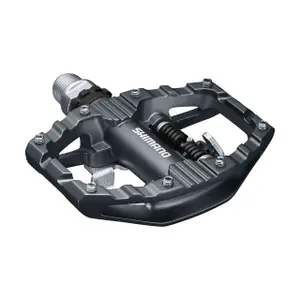




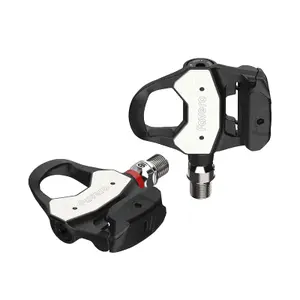
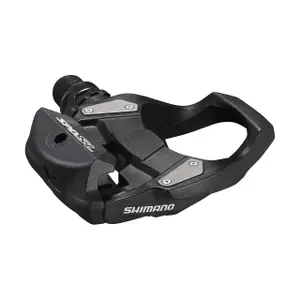
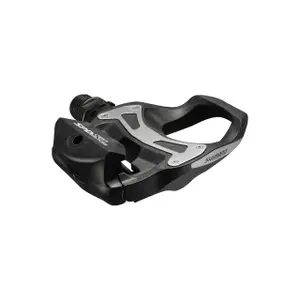
Gravel automatic pedals combine the efficiency of a cleated pedal with the ability to walk: most use a two-bolt cleat, recessed into a textured sole, and engage from both sides. Compare their grip in mud and sand, their support surface, then the clearance left at the heel and the hardness of the release.
Which automatic pedals for gravel?
A gravel ride involves hours of steady pedalling on tarmac and trails, but also carrying your bike, stopping for photos, refuelling in the village, and sometimes walking a few metres up a steep hill. The ideal pedal needs to hold your foot as securely as a road pedal, allow you to walk without slipping, and keep working even when filled with dirt. That's why the vast majority of riders use two-bolt cleat pedals, derived from cross-country mountain biking, which are lighter and slimmer than enduro models.
Two-bolt or three-bolt cleats: what to choose for gravel?
The two-screw cleat, whether it’s SPD standard or from a specific manufacturer, sits recessed behind the lugs of the shoe: when walking, it stays off the ground, wears little on pebbles, and doesn't cause the shoe to slip on a wet surface. It is paired with a cleated shoe, more or less stiff depending on whether you’re aiming for racing or touring.
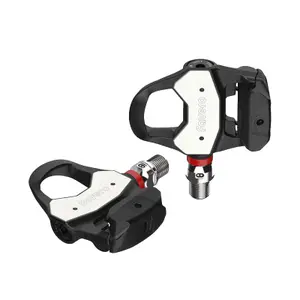
The three-screw cleats on road pedals offer a larger contact area, and some racers keep them for fast events on rolling paths. But they protrude under a smooth sole, making every step precarious and don’t perform well in gravel. The power meter pedals shown on this page use this type of cleat: check this before fitting them to a gravel bike.
Mud, sand, and double-sided entry
On a muddy path, the sole and cleat can get filled with dirt, which may prevent engagement. Gravel pedals respond with an open mechanism, with wide clearances that allow mud and sand to escape, or a cross mechanism that locks on four sides. The double-sided entry, almost universal, allows you to re-engage without looking after a stop on an incline or a brief walk. Well-protected bearings with seals extend the life of the pedal in the rain and dust.
Float, tension, and cleats: adjusting your gravel pedals
Float is the freedom to pivot the heel before release. In gravel, where your position often changes on long rides, a bit of play helps protect your knees. Each system has its own logic: with TIME, the ATAC cleat allows an angular movement of 5 degrees on each side and a lateral movement of 2.5 mm, with a release angle of 13 or 17 degrees depending on the mounting direction, or 10 degrees with the Easy version. With Shimano, the SM-SH51 cleat releases the foot only by twisting the heel, while the SM-SH56 does so in multiple directions. The tension, adjustable by a screw on most models, is set to minimum to start, and then stiffened if the foot unintentionally releases upon impact.
For placement, the pedal axle is generally located under the joint of the big toe. Trace the outline of the cleat with a marker before replacing it: the new one will find exactly the same setting.
Mixed, platforms, and other gravel components
For bike touring or gravel used also in the city, mixed pedals, with one side cleated and one flat, allow you to ride in trainers on short trips. Automatic pedals surrounded by a small platform support the shoe when it is loose or when the foot isn’t engaged. The rest of the cockpit should be adjusted with the same attention: gravel saddles for sitting comfort, gravel handlebars for control downhill, and seat posts for height. All these elements are grouped in gravel peripheral components.
Which gravel pedal brands to choose?
Shimano offers its SPD system from the racing XTR pedals to the trekking models Deore XT PD-T8000, which have a single engagement side, and provides two types of cleats to adjust the release to your experience.
Look targets its X-Track Race for both gravel and cross-country: compatible with SPD cleats, it features large drainage areas for mud and sand, and its tension can be adjusted according to your level.
TIME, part of the SRAM group, pairs its ATAC XC pedals with two-screw cleats designed for cross-country, cyclocross, and gravel, providing both angular and lateral float and an adjustable release angle.
crankbrothers builds the Eggbeater around a spring mechanism that engages on four sides and evacuates mud very well, offering customizable float and release angle; the Candy adds a platform, and the Double Shot combines a flat side and a cleated side.
Gravel pedals on sale
Last-season pedals join the road clearances, where many components for gravel can also be found, and the new models are presented in the new arrivals. Before the season of big rides, the French Days allow you to equip a second bike with the same cleat system.
Frequently Asked Questions
SPD pedals or road pedals for gravel?
For most cyclists, two-bolt cleat pedals: they allow you to walk, resist mud better, and engage from both sides. Road pedals are mainly suited for riders who go fast on smooth paths and rarely put a foot down.
Can you fit mountain bike pedals on a gravel bike?
Yes, the threading of the pedals is the same, and automatic cross-country pedals are widely used in gravel. Just avoid enduro models with large cages, which are heavier and designed for impacts that gravel doesn't experience.
Do SPD cleats fit all two-bolt pedals?
No. Shoes accept all two-screw cleats, but each pedal system has its own: an SPD cleat only engages in an SPD compatible pedal, and crankbrothers or TIME pedals require their own cleats. Check the compatibility stated by the manufacturer.
How to get started with automatic pedals in gravel?
Set the tension to minimum and, with Shimano, choose a cleat with multidirectional release. Practice on flat, open terrain, releasing the foot before each stop, then move to trails when the action becomes automatic.
How to maintain gravel pedals after a muddy ride?
Rinse them with fresh water without aiming a powerful jet at the bearings, dry them, then drop a bit of lubricant onto the locking mechanism. Regularly check the tightness and wear of the cleats, which affect the precision of the release.