Comfortable gravel saddle for long distances




Starting at £202.98
£141.16


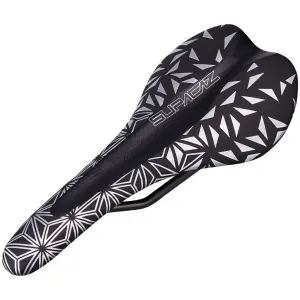
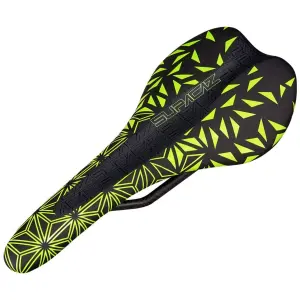
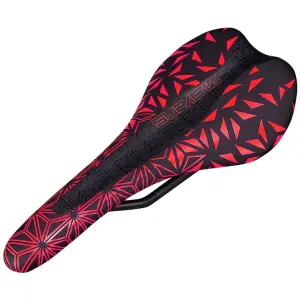
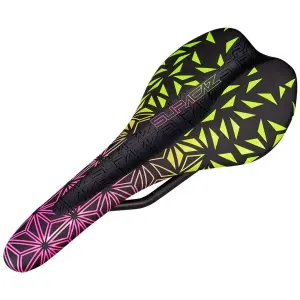
A gravel saddle must remain comfortable for hours on endlessly bumpy trails, while allowing your hips to shift back on descents. First, choose its width based on your sit bones, then its shape, flat if you move around a lot, curved if your position is stable, and finally rails and a shell that absorb shocks.
What to expect from a gravel saddle?
On gravel, the saddle endures what the road spares: gravel, ruts, roots, and corrugated surfaces transmit vibrations throughout the ride. The position is often a bit more upright than on a racing road bike, with a higher handlebar, and it varies more: you lean forward to accelerate on a climb, move back on descents, and stand on the pedals in rough sections. A good gravel saddle supports the sit bones over long hours, maintains a slim nose to avoid hindering these movements, and absorbs some shocks without becoming soft.
Shape, length, and cut: finding the gravel saddle that suits you
The shape is chosen based on how you occupy the saddle. A flat profile allows you to slide back and forth and is suitable for flexible cyclists who frequently change position. A wavy or cut-out profile stabilises the pelvis in one spot, for those who ride in a stable position. A neutral profile, in between the two, supports the natural tilt of the pelvis.
Many gravel saddles are short, around 245 to 265 mm, with a rapidly widening rear: you remain stable even when moving forward on the nose. The width is determined by the distance between your sit bones, measured on a piece of corrugated cardboard or at a bike shop, and most brands offer their models in two widths. A central cut-out or channel removes material where pressure builds when you lean towards the handlebars.
Rails, shell, and padding: filtering vibrations from the track
On paths, the rails act as shock absorbers. Those made of titanium or hollow stainless steel flex slightly and soften vibrations, while carbon rails lighten the saddle at the cost of more direct shock transmission. Some shells incorporate deformable areas or damping elements between the shell and the rails. Finally, the padding should remain firm: overly thick foam compresses over time and creates pressure points. If you're going on a trip with a large saddle bag, check the available rail length under the saddle and the compatibility of the attachment with the rail material.
Saddle, post, and gravel handlebars
The saddle is adjusted with its post: choose a gravel saddle post that fits your rails, and consider the available setback if you switch to a shorter saddle. After changing gravel pedals or shoes, double-check the height, as the thickness of the cleat varies from one system to another. The gravel handlebars set the height of your hands, which affects the tilt of your pelvis. If your bike rides mostly on tarmac, the road saddles page details racing shapes, and the MTB saddles page lists models for trails.
Which gravel saddle brands to choose?
Selle Italia builds its gravel range on three profiles: one neutral, another flat, and the last wavy, each in a short Boost version: the Flite Boost Gravel features 316 titanium rails that dampen vibrations and a Superflow cut, while the Novus Boost Evo Gravel has the wavy shape.
Selle San Marco targets its Shortfit Allroad Racing at road, gravel, and bikepacking: 262 mm long, it combines hollow stainless steel rails and integrated damping elements in the shell to filter repeated impacts; the Allroad also comes in a Sport version.
Pro, a component brand of Shimano, categorises its saddles based on the flexibility of the cyclist: the Falcon, with a flat profile, for flexible cyclists in a stable position, the wavy Turnix for balanced pressure distribution, and the Griffon, with a rounded rear, for those who move around a lot on the saddle.
WTB, born Wilderness Trail Bikes in California, designed the Gravelier for gravel cyclists who ride long distances, leaning forward: 246 mm long, it features a curved profile that supports the pelvis, a central cut-out, and a quickly widening middle section; the Volt and Silverado are from the MTB range.
Discounted gravel saddles
Saddles from refreshed ranges are available in the road clearance section, which also includes components used in gravel, and recent arrivals are highlighted in the new arrivals. Changing your saddle before summer gives you time to adjust to it before long holiday rides.
Frequently asked questions
Which gravel saddle for long distances and bikepacking?
A saddle of the right width, with firm padding and rails that filter vibrations a bit, rather than a very thick model. Try it on increasingly longer rides before a trip, and check that it accommodates your saddle bag attachment.
What’s the difference between a road saddle and a gravel saddle?
The shapes are similar, but some gravel models prioritise a bit more generous padding, rails or a shell that absorb shocks, and an abrasion-resistant cover. However, a road saddle that fits you perfectly remains a good choice on a gravel bike.
Is a specific gravel saddle necessary for women?
Not necessarily. Several brands offer women’s versions, which are wider or have a more open cut, but the starting point remains the measurement of your sit bones and your riding style. Many female cyclists actually choose a unisex saddle of the right width.
Should a gravel saddle be very padded?
No. Moderate and firm padding better supports the sit bones over time than thick foam, which sinks and shifts pressure to soft tissues. Comfort mainly comes from the shape, width, and shorts.
How can I tell if my gravel saddle is badly adjusted?
A swaying pelvis, knee pain, or constant sliding forward indicate that the height or angle needs adjustment. Correct one parameter at a time, in small increments, and ride several times before changing another.