Mountain bike socks, neck warmers and accessories
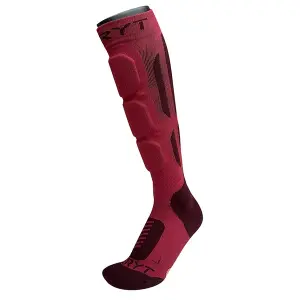
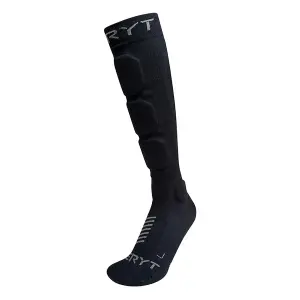


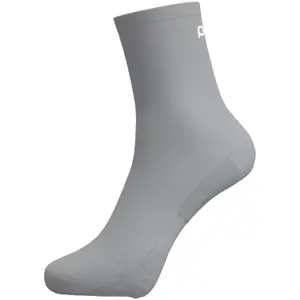


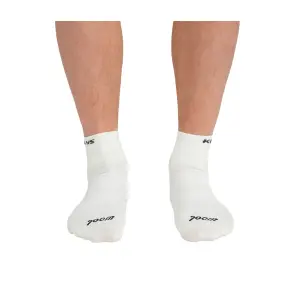
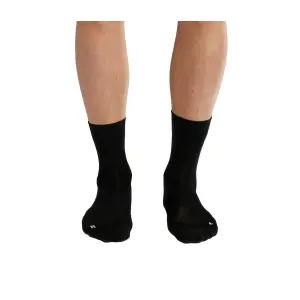
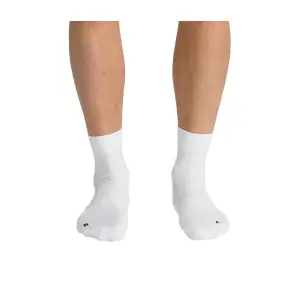


Well-chosen mountain bike socks keep your feet dry inside your shoes and protect your ankles from branches and pedals. This page brings together trail socks, in merino or compression versions, as well as the accessories that complete your kit: neck warmers, headbands, caps and beanies to wear under your helmet, arm warmers, insoles and laces.
Why socks designed for mountain biking?
On a mountain bike, your foot works inside a stiff shoe, sweats on the climbs, takes on water at fords and constantly brushes against branches, stones and the pins of flat pedals. A cycling sock wicks moisture away instead of holding on to it like cotton, stays in place without creasing under the arch and is reinforced at the heel and toes, where it wears the most. Models that come higher up the leg protect the ankle bones from knocks against the crank and from brambles, and some so-called protection socks add padding over the shin or the ankle.
What socks to wear for mountain biking: height and material
- Height: a low cuff suits cross-country in hot weather, while a mid-calf cuff better protects the ankles on the trails and goes well with baggy shorts.
- Synthetic fibres: polyamide and polyester dry quickly and resist abrasion; mesh zones on top of the foot ventilate in summer.
- Merino wool: it keeps a feeling of warmth even when damp and holds on to few odours, an advantage in winter and on multi-day rides.
- Compression: compression socks and calf sleeves apply pressure to the calf; some riders wear them while riding, others for recovery.
Neck warmer, beanie, arm warmers: against cold and sweat
The neck warmer is the mountain biker's most versatile accessory: pulled up over your nose, it filters the dust on dry tracks; around your neck, it keeps out the cold air on descents. Under the helmet, a headband stops sweat before it runs into your eyes, and a thin beanie protects your ears in winter without preventing you from adjusting the helmet properly. A cap is worn under an open-face helmet for shade, or after the ride. Finally, arm warmers cover your arms through a cool morning and slip into a pocket when the temperature rises.
Insoles and laces: accessories for your shoes
A suitable insole supports the arch of your foot and limits pins and needles in your toes on long rides, especially if the shoe's original insole is flat. Elastic laces are adjusted once and for all and no longer come undone as you ride, an extra margin of safety when a loop dangles near the chainring. These accessories fit most mountain bike shoes.
Completing your trail kit
Choose your socks along with the rest of your kit: baggy or padded mountain bike shorts, a mountain bike jersey and, in cool weather, a mountain bike jacket. For the road, road cycling clothing accessories add winter overshoes to the socks; for everyday journeys, urban cycling clothing accessories bring together gloves, socks and base layers.
Which mountain bike sock and accessory brands to choose?
Xtenex makes patented elastic laces: the braid forms knots wider than the eyelets, which are positioned between two eyelets to adjust the fit, and a rubber core stretches to follow the swelling of your foot over the day; the Randonne model fits lace-up shoes.
POC offers its Motion socks in an MTB version and in a Long version, which comes higher up the leg to protect the ankle.
Fox Racing offers its Ranger socks in two heights, the merino Flexair, a neck gaiter and Fox Union insoles, including a version with arch support.
Mavic, a wheel and rim brand, gives the name of its downhill wheels, Deemax, to a mountain bike sock.
X-Socks, a range of technical socks designed in Switzerland within X-Bionic, offers here the Perform Merino Crew, in an Expert version, and the low-cuff Expert Crew Low.
Mountain bike socks and accessories on sale
End-of-line models join mountain bike clothing clearance, and recently arrived accessories feature in new arrivals. Black Friday and the festive season are a good time to slip a pair of warm socks or a neck warmer into a present.
Frequently asked questions
Do you need merino socks for mountain biking?
They are not essential in summer, when a thin, breathable synthetic sock dries very quickly. Merino comes into its own in cold, wet weather, as well as on multi-day rides, since it stays pleasant to wear for longer. Many socks blend the two fibres.
Are compression socks useful for mountain biking?
They apply graduated pressure to the calf, which some mountain bikers appreciate while riding and others afterwards, for recovery. Choose the size according to your shoe size and, when the brand specifies it, your calf circumference: poorly fitted compression hinders more than it helps.
Can you wear a cap or a beanie under a mountain bike helmet?
Yes, provided they are thin: a cycling cap with a soft peak or a light beanie slips under the shell. Then adjust the helmet with the beanie in place, as the extra thickness changes how it sits. A thick winter beanie would stop the helmet from protecting you properly.
How do you keep your feet warm mountain biking in winter?
Wear merino or insulating socks without squeezing your foot into the shoe: a tight foot gets cold faster. A spare pair in your pack helps after crossing a ford, and winter or high-top shoes complete the protection.
Why choose elastic laces?
They are adjusted once and for all and do not come undone, which stops a loop from getting caught in the drivetrain. They also make it easier to put your shoes on and follow the swelling of your foot over a long ride.