Road cycling shoes for men and women

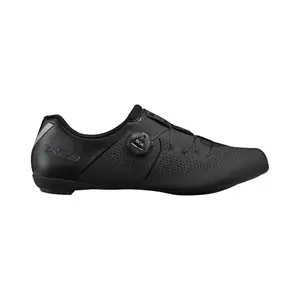


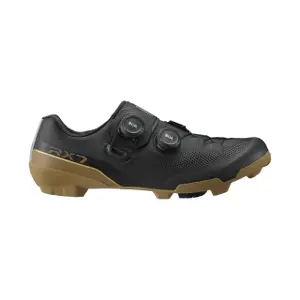
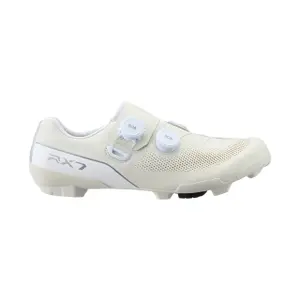
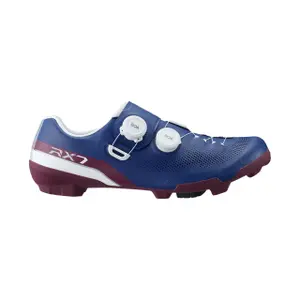


Road cycling shoes transfer the effort of your legs to clipless pedals through a stiff sole and a cleat fixed with three bolts. Compare sole stiffness, the closure system, dial, laces or straps, and the shape of the fit, standard or wide, then check the size and the compatibility with your pedals. Men's, women's and junior models are gathered here.
What are road cycling shoes for?
With an ordinary shoe, the sole flexes with every pedal stroke and the foot slips. A road cycling shoe eliminates these losses: its stiff sole spreads the pressure across the whole sole of the foot, and the cleat bolted underneath locks into a clipless pedal, keeping the foot in the right place throughout the pedal stroke. It is aimed at sportive riders as well as Sunday riders who want more comfort over long distances, at triathletes, and at riders who train on an indoor trainer.
Its smooth sole and protruding cleat, however, make it poorly suited to walking. If you often need to put a foot down, mountain bike shoes, whose cleat is recessed into a treaded sole, are more practical.
3-bolt cleats: how does the road system work?
Road shoes take a wide cleat fixed with three bolts, compatible with the main road pedal systems. Its large contact area gives a feeling of stability that riders appreciate during hard efforts. At Shimano, the colour of the cleat indicates its float: the yellow one lets the heel pivot by 6 degrees, the blue one by 2 degrees, and the red one locks it completely. More float lets the knee follow its natural line; a fixed cleat suits riders whose position has been precisely set up.
Some indoor cycling shoes also accept two-bolt cleats, which are easier to walk in. On the road, the three-bolt system remains the benchmark.
Sole, closure, upper: what explains the differences between ranges
The sole is the first criterion. In nylon or composite, it keeps a little flex, pleasant for easy rides and for walking. In carbon, it becomes very stiff, lighter and thinner, which brings the foot closer to the pedal axle. Several manufacturers publish a stiffness index that lets you compare their models with each other.
The closure makes the second difference. BOA-type dials adjust the tension to the millimetre, even while riding; laces spread pressure very evenly and appeal with their classic look; straps, simple and light, are found on entry-level models and on triathlon shoes, which slip on quickly in transitions. Finally, the upper, in microfibre, mesh or knitted fabric, determines the support, ventilation and flexibility around the foot.
What size and shape should you choose?
Measure the length of your foot standing up, from the heel to the tip of the longest toe, preferably at the end of the day, when the foot has swollen slightly, then check the brand's size chart: conversions vary from one manufacturer to another. Your toes should not touch the front, and your heel should not lift when pedalling.
If you have a wide forefoot or a high instep, several brands offer wide versions of their models. Women's models come in smaller sizes and dedicated colours. A shoe that is too narrow causes numbness and hot spots under the foot after a few hours.
Setting up your cleats properly
Position the cleat so that the joint of your big toe sits directly over the pedal axle, then angle it to respect the natural angle of your foot, heel turned slightly in or out depending on your build. Tighten the bolts gradually, check them after the first rides and replace the cleats as soon as the wear indicators have disappeared: a worn cleat releases badly or too easily.
Which road cycling shoe brand should you choose?
Shimano covers the whole road range, from the RC3 and RC5 to the RC7, up to the S-Phyre RC9, whose carbon sole reaches stiffness index 12 on its scale and which comes in a wide version, roomier at the forefoot.
Quoc, an independent brand born in London, fits its M3 Air with a double dial and lace-style loops, for three-bolt road cleats; the Gran Tourer applies its know-how to gravel.
DMT, an Italian brand based near Verona, developed the Pogi's with Tadej Pogačar, with a one-piece knitted upper and a monocoque carbon sole; the KR0 uses the same knitted upper with two BOA dials.
Lake claims the first heat-mouldable carbon sole and takes care of hard-to-fit feet: the CX242 spreads its closure over a segmented upper and comes in a wide version, alongside the CX201.
Sidi, the Italian firm founded by Dino Signori, who is credited with the adjustable three-bolt cleat, sells the closure parts of its shoes separately to extend their life, as with the Ergo 6 or the Shot 3.
Giro has made the laced road shoe its signature with the Empire SLX, built on an Easton EC90 carbon sole, while the Imperial II closes with a BOA dial.
Where can you find road cycling shoes on sale?
Colours and sizes from replaced collections are offered in road shoe clearance, recent models in new arrivals. To match your outfit, bib shorts and road bike helmets are in road cycling gear. The summer and winter sales as well as Black Friday are good opportunities to try a higher range.
Frequently asked questions
How do you clip in and out of road cycling shoes?
Engage the front of the cleat in the pedal, then press down with your heel until it clicks. To release, simply twist your heel outwards. Practise while stationary, leaning against a wall, and set a low spring tension at first so you can unclip without effort.
Can you walk in road cycling shoes?
For a few metres, yes, but the protruding cleat makes walking slippery and wears quickly. Rubber cleat covers make coffee stops easier. For riding that mixes cycling and walking, shoes with recessed cleats are a better choice.
Road or mountain bike shoes for beginners?
For riding exclusively on the road, road shoes offer more stability and stiffness. If you are new to clipless pedals or also ride on tracks, a shoe with two-bolt cleats is more reassuring, as it lets you walk and unclip more easily.
What if you have wide feet?
Look for the wide versions offered by several manufacturers, often marked "wide" or with a letter added to the model reference. Models with a soft or segmented upper and dial closures, which can be finely adjusted over the top of the foot, also help. Always try them on with the socks you wear for cycling.
How do you ride in cold weather with road cycling shoes?
Road shoes are very well ventilated: in cool weather, windproof or neoprene overshoes limit heat loss. For regular winter riding, there are insulated, waterproof models with a higher cut, which you can wear without overshoes.