Road bike computer: GPS, power and navigation

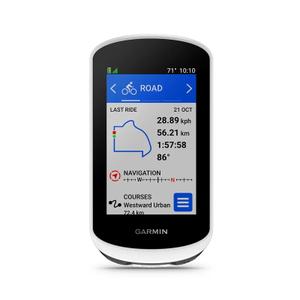



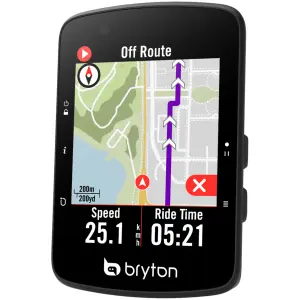
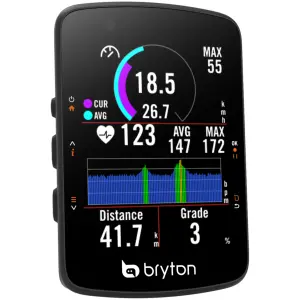
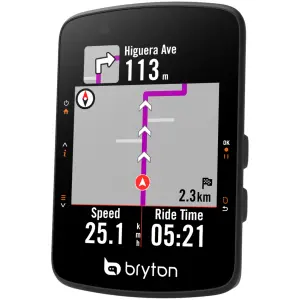




A road bike computer displays speed, distance and duration; in GPS mode, it keeps track of each ride, follows a planned route, and reads sensors for power, cadence and heart rate to guide your training. Choose based on your rides: simple wireless computer, compact GPS for performance, or large mapping screen for long distances, not forgetting the mount.
Simple or GPS computer: what do you need on the road?
The classic wireless computer measures speed using a sensor mounted on the fork and a magnet fixed to a spoke of the wheel. It's enough to track speed, distance, and ride duration, with a battery that lasts a long time. The GPS computer goes further: it records your route, calculates elevation gain, interacts with sensors and your smartphone app, and transfers each ride to your training platforms. For a road cyclist who trains, prepares for a cyclosportive, or discovers new routes, it’s usually the GPS that stands out.
Power, cadence, heart rate: managing training
On the road, the GPS computer becomes the training dashboard. It connects via ANT+ or Bluetooth to a power sensor, a heart rate strap, and a cadence sensor, then displays in real-time the zones you are aiming for. Most recent models accept structured sessions: intervals, power zones, and recoveries are displayed step by step, with an alert when you go off-target. The Bryton Rider 460E can be controlled from the brand's app, and the Wahoo ELEMNT BOLT reads both power sensors and equipped pedals.
Navigation, routes, and climbs
A road GPS loads a pre-planned route, displays it on a map, and alerts you before each turn. In case of deviation, the more advanced models recalculate the route, like the ELEMNT ROAM from Wahoo. The features dedicated to climbs break down the ascents of the route to indicate the gradient and remaining distance: Bryton offers this on the Rider S810 with its Climb Challenge, even without a loaded route. For navigation, screen size matters: the bigger it is, the easier it is to read the map at a glance.
Screen, weight, and battery life
Two philosophies coexist. Compact computers prioritize discretion and aerodynamics: the ELEMNT BOLT from Wahoo features a 5.8 cm colour screen and weighs about 85 g. Larger screens favour reading maps and data: the ELEMNT ACE reaches 9.7 cm and includes a wind sensor that measures air speed, weighing 208 g.
Battery life ranges from 20 hours for the BOLT to 41 hours for the Sigma ROX 4.0 Endurance and 50 hours for the Bryton Rider S810, depending on the manufacturers. It decreases with screen brightness, navigation, and the number of connected sensors: for long-distance events, plan for a backup or an external battery.
Safety: radar and incident detection
Some computers can pair with a rear light equipped with a radar, which alerts you on the screen of vehicles approaching from behind: this is the case for the ELEMNT BOLT and the Bryton Rider S810, which are compatible with these radars. The Garmin Edge Explore 2 has incident detection. These features complement vigilance without replacing it.
Properly fixing your computer on a road bike
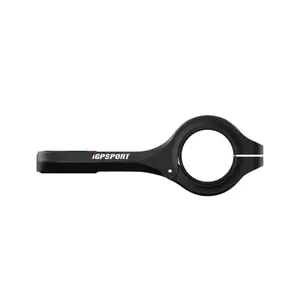
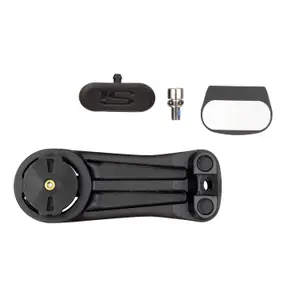
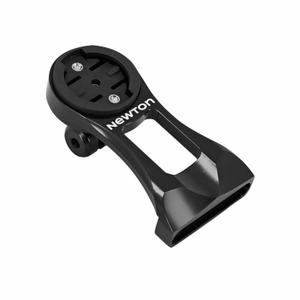
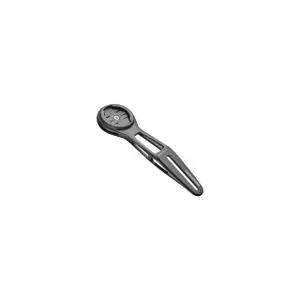
On a road bike, the computer is preferably mounted on an out-front mount, in front of the handlebars: it stays within your field of vision without lowering your head and leaves the stem clear. Aero mounts integrated into monoblock handlebars or specific stems from certain brands keep the cockpit tidy. Check the compatibility between the computer mount, whether quarter turn or proprietary, and the mount; the page for road computer mounts gathers the models and adapters.
The other electronic equipment
To also track running or sleep, smartwatches can complement or replace the computer. Road lighting makes early morning rides safer, and home trainers extend training during winter with the same computer. If you ride on trails, check out gravel GPS units and MTB GPS units.
Which road bike computer brands to choose?
Cateye, a Japanese manufacturer of bike accessories, offers simple wireless computers like the Padrone, which has a large screen, weighs 31.5 g, and runs on a button cell battery.
Wahoo offers its ELEMNT range in three formats: the compact and aerodynamic BOLT, the ROAM with a 7.1 cm screen for navigation, with 25 hours of battery life, and the ACE with a large touchscreen, dual-frequency GPS, and integrated wind sensor.
Sigma focuses on lightweight and endurance with the ROX 4.0 Endurance: only 51 g and a claimed 41 hours of battery life, making it suitable for multiple long rides without recharging.
Bryton covers all levels, from the button-operated Rider 460E to the Rider S810, featuring a 3.5-inch colour touchscreen, compatible with radars, power sensors, and electronic gear shifting.
Garmin targets the Edge Explore 2 at cyclists who want a GPS that is easy to use: 3-inch touchscreen, maps tailored to the type of ride, incident detection, and up to 24 hours of battery life.
On sale: road computers and GPS
Computers from a previous generation and end-of-range items are found in the road electronic clearance. The newly listed computers are also among the new arrivals. To switch to GPS before the first cyclosportives, keep an eye out for Black Friday or French Days.
Frequently asked questions
Is a power sensor needed to benefit from a GPS computer?
No. A GPS records speed, distance, elevation, and routes without any sensors, and a heart rate strap is sufficient for training by zones. The power sensor provides a direct measurement of effort, useful for structured sessions, but it can be added later.
What battery life to expect for a cyclosportive or brevet?
For a cyclosportive lasting a few hours, all GPS units are adequate. For a brevet over 200 km, aim for a stated battery life that is significantly higher than the expected duration, as navigation and connected sensors will reduce it. An external battery wired in can take over for longer distances.
Does a GPS computer display the speeds of an electronic shifting system?
Yes, on compatible models: the computer connects to the shifting and displays the gear engaged and sometimes the battery level. Bryton mentions this compatibility on the Rider S810. Check the brand of your shifting system in the computer's specifications before purchase.
Can a structured training session be tracked on your computer?
Yes, most recent GPS units import sessions from the manufacturer’s app or a training platform. The screen shows the target for each block and the remaining time, and the computer signals deviations. This is the simplest way to follow a plan without looking at your phone.
Is a simple wireless computer enough to start on the road?
Yes, if you just want to track your speed and distance. A model like the Cateye Padrone sets up in a few minutes with the wheel circumference. Switching to GPS is justified when you want to follow routes or analyze your rides.