
Road bike disc brake pads, resin or metal

Starting at £139.60
£104.62
Starting at £245.36
£178.45
Starting at £516.11
£358.59
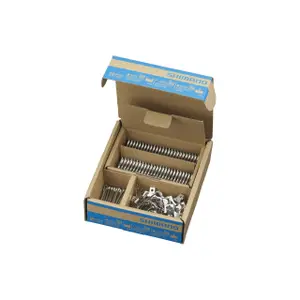
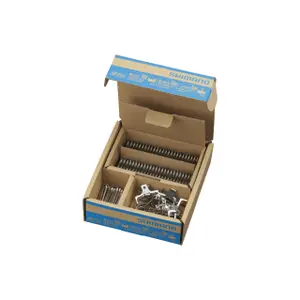
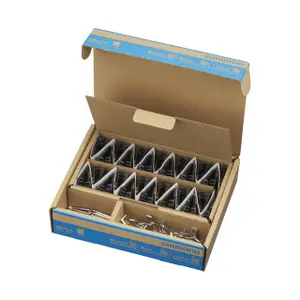
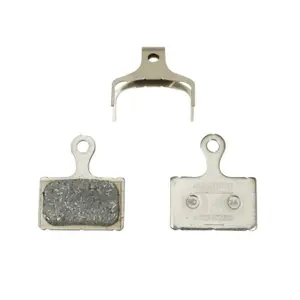
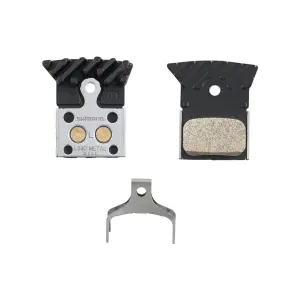
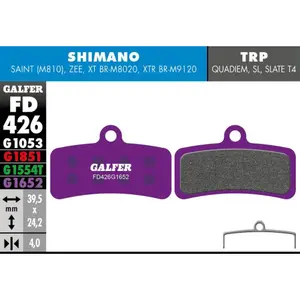
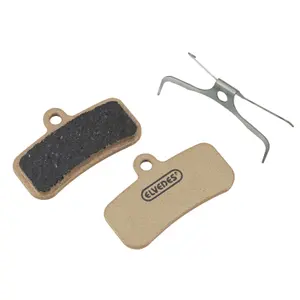
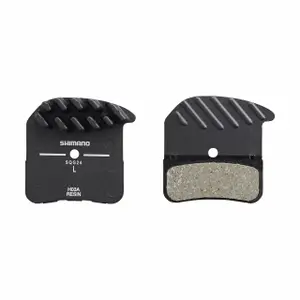
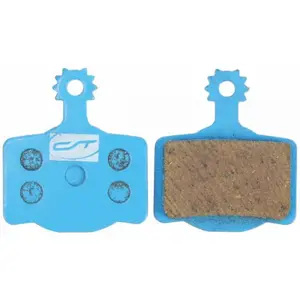
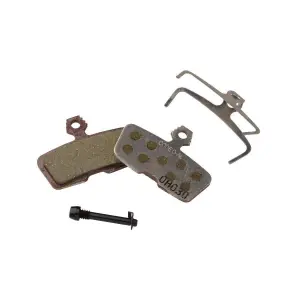
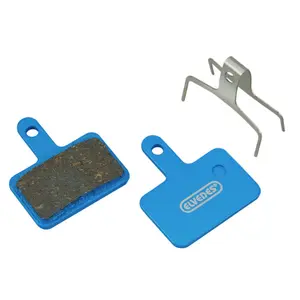
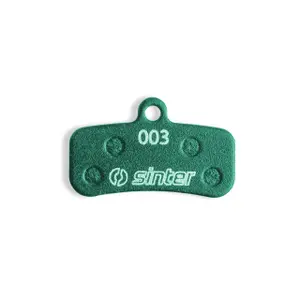
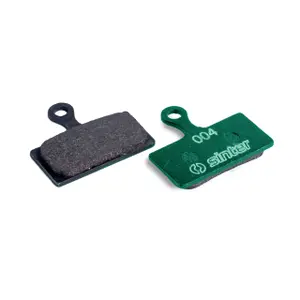
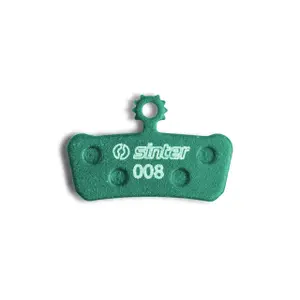
Road bike disc brake pads line the callipers of disc brakes. They are chosen first according to the calliper model, Shimano, SRAM or Campagnolo, then by compound: resin if you want progressive, quiet braking, sintered metal for rain and long descents. A bike with rim brakes has none: it wears brake blocks.
Disc pads or rim brake pads: what wears on a road bike
A road bike with rim brakes wears brake blocks, which rub directly on the rim. A road bike with disc brakes wears pads, housed in a compact two-piston calliper fitted in Flat Mount on the rear chainstay and on the fork. These pads are small, and the compound that covers them is only a few millimetres thick: on a bike that covers a lot of miles, especially in the rain, they need checking every few weeks.
Finding the pads that fit your road calliper
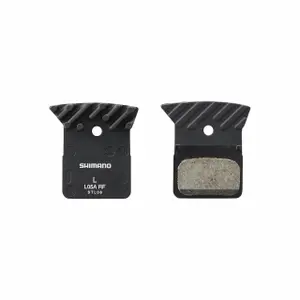
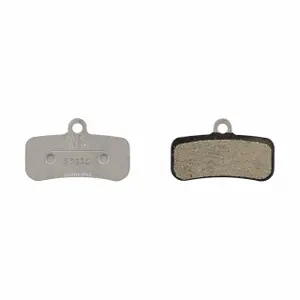
The shape of the pad depends on the calliper, not the frame. At Shimano, the Dura-Ace BR-R9170, Ultegra BR-R8070 and 105 BR-R7070 road callipers share the same shape, that of the finned resin L05A-RF or the metal L04C. SRAM uses for its Force, Rival, Apex and S700 road callipers a shape shared with some Level MTB brakes. Campagnolo has its own shape, and cable-operated mechanical callipers often use yet another one.
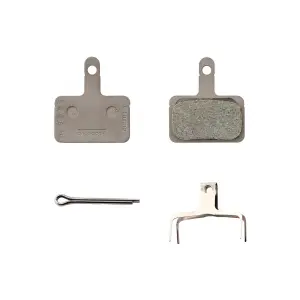
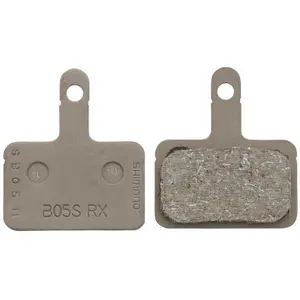
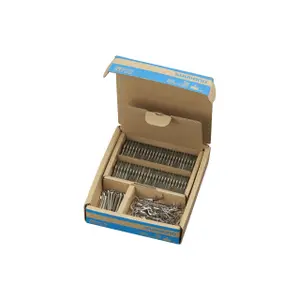
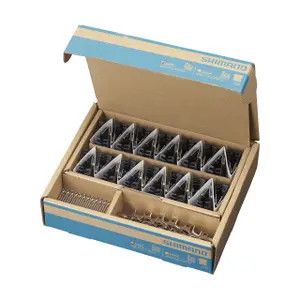
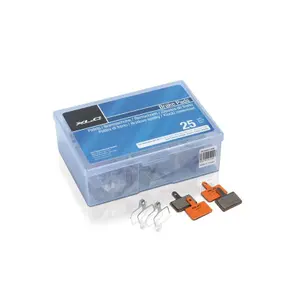
Note the reference engraved on the calliper, or put a used pad next to the new one: same outline, same pin hole, same spring. Packs of 20, 25 or 50 pairs are for clubs and riders who maintain several bikes.
Resin or metal for braking on the road?
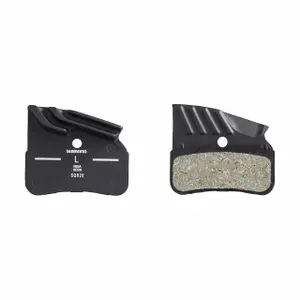
On the road, resin, also called organic, is the most widespread choice: it bites progressively, stays quiet and is gentle on the rotor. Sintered metal takes over if you often ride in the rain, string climbs together or if your weight puts a heavy load on the brakes: it copes better with heat, at the cost of a little noise. Finned pads, recognisable by the heat sink sticking out of the calliper, draw off some of the heat before it reaches the brake fluid. Always check that your rotor accepts metal pads.
How to change road bike disc brake pads
Remove the wheel by unscrewing the thru-axle, then the pin or clip that holds the pads, and take them out with their spring. Push the pistons back with a plastic tool, slide in the new pads, refit the pin and the wheel, then pump the lever until the stroke feels firm again. A pad whose compound is down to less than half a millimetre should be replaced straight away. With the wheel out, never squeeze the lever: the pistons would come out and touch. Slip the transport spacer between the pads to avoid this.
Pads that rub or squeal: adjustments on the road
The gap between pads and rotor is small on a road calliper, so slight rubbing appears quickly. It often happens after a wheel change, as the rotor does not sit in exactly the same place from one hub to another: loosen the two calliper bolts, squeeze the lever to recentre it, then tighten them again. Squealing when braking is more a sign of a glazed or contaminated compound. New pads are bedded in with about ten firm stops, from cruising speed down to walking pace, without locking the wheel.
Which road bike disc brake pad brand should you choose?
Shimano supplies the original pads for its road callipers, such as the resin L05A and the metal L04C with cooling fins, alongside shapes intended for its MTB and city brakes.
Brake Authority, a French brand developed with downhill racer Fabien Barel, offers its compounds for Shimano road callipers, including a Ceramic version, in sintered metal protected by a ceramic layer that limits the heat passed to the calliper.
Elvedes offers the SRAM Red road brake shape in three compounds, organic, metallic and metal-carbon, in pairs or in boxes, as well as a pad for Campagnolo brakes.
Swissstop, a Swiss brake compound specialist, offers its Disc 34, designed for Shimano road callipers such as the BR-RS805, in several organic compounds, including the EXOTherm2 with a finned aluminium backing plate.
SRAM sells the pad for its Force, Rival and Apex road callipers in an organic compound, with a steel backing plate for quietness or an aluminium one for lightness.
Brakes, callipers and road brakes on sale
If the calliper itself is worn, see our road bike brake callipers or complete road bike disc brakes, with their rotors. For rim brakes, see our road bike brake blocks, and for an off-road bike, MTB disc brake pads cover four-piston callipers. End-of-line items are in the road brakes outlet, and the seasonal sales are a chance to stock up on pads before summer.
Frequently asked questions
How often should you replace road bike disc brake pads?
As soon as the compound gets close to half a millimetre, a metallic noise appears when braking or the lever travel gets longer. Look at the calliper from above with a torch, or take the pads out to measure them. Always change both pads in the same calliper.
Are road and MTB disc brake pads interchangeable?
Only the shape counts: a pad fits any calliper designed for it, road or MTB. Some shapes are shared by both within the same brand, others are not. Rely on the list of compatible callipers given for each product.
Should you choose finned pads?
They are useful in the mountains, on long descents, and for a heavier rider: they delay the rise in brake temperature. On a flat or rolling route, a pad without fins is enough. Check that your calliper leaves room for the fins.
Why do my disc brakes squeal in the rain?
Water and road spray change the contact between pad and rotor: a temporary noise is normal. If it persists in dry weather, clean the rotor with a brake degreaser and check the pads, which may have been contaminated by a lubricant.
Can you ride without bedding in new pads?
You can ride, but braking stays weaker until the compound has laid down its transfer layer on the rotor. Take a few minutes to bed them in before a fast descent or a group ride, on a clear road.