Carbon or aluminium gravel wheels, 700C and 650B


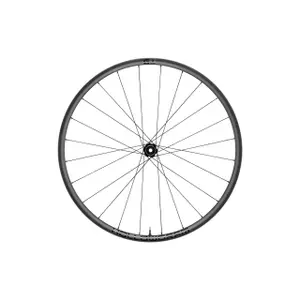
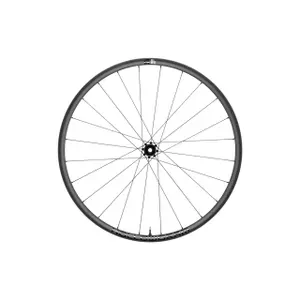
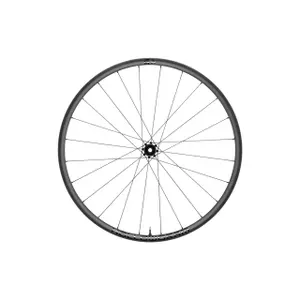


Starting at £160.75
£126.86


Starting at £1,218.38
£797.60

Gravel wheels are primarily chosen based on the internal width of the rim, which determines the tyres you can fit, then on the diameter, 700C or 650B, and the material, carbon or aluminium. Next, check the axles, the disc mount, and the cassette body of your drivetrain. Front wheels, rear wheels, and pairs are gathered here, alongside road wheels.
What distinguishes a gravel wheel from a road wheel?
A gravel wheel rolls on white paths, forest tracks, and damaged roads, fitted with tires of about 35 to 50 mm inflated low. It must absorb the shocks from stones and roots, sometimes the weight of bikepacking bags, while remaining light enough to accelerate on asphalt. It is identifiable by its wider rim, almost always designed for tubeless, its disc braking, and its thru-axles. Its rim is often lower than that of a fast road wheel, although some carbon models exceed 50 mm for gravel racing.
Internal width: the measurement that determines your tires
The internal width of the rim, measured between its two edges, determines the usable tire width and the shape it takes once inflated. Gravel wheels in aluminium generally measure around 21 to 25 mm, while many road wheels stay below 21 mm; some carbon rims reach 28 or even 32 mm for tires of 40 mm and more. A wide rim better supports the sides of a tire at low pressure: it twists less in corners and bottoms out less on a shock. Each manufacturer publishes the tire range accepted by its rim. Stick to it, then check the available tyre clearance in your frame and fork.
700C or 650B: which wheel size for gravel?
The majority of gravel bikes run on 700C, which is a rim diameter of 622 mm according to the ETRTO standard, allowing for a transition from almost road tires to knobby tires on the same wheel. The 650B, at 584 mm, is used for fitting larger tires, around 47 mm and beyond, without increasing the external diameter of the wheel: more comfort and grip on rough terrain, but slightly less efficiency on asphalt. Many frames accept both diameters. It's the manufacturer of the bike that indicates this, along with the maximum tire width for each.
Carbon or aluminium: which gravel wheel to choose?
Aluminium remains the most common material in gravel. It handles impacts well against stones and is suitable for loaded trips as well as everyday rides. Carbon lightens the pair and stiffens the wheel, which is noticeable in accelerations and climbs; it also allows for taller profiles, appreciated in fast events where you ride for long periods in a group on smooth trails. In both cases, check the number of spokes and the maximum load stated by the manufacturer if you're going with panniers.
Axles, disc, and freehub body: compatibility issues
Most gravel bikes come with 12 mm thru-axles, at 12x100 in front and 12x142 in the rear; earlier models and some entry-level bikes still operate with quick releases and a rear hub of 135 mm. The disc is attached with six bolts or via Center Lock, the splined locking system by Shimano: a Center Lock hub fits a six-bolt disc with an adapter, not the other way around.
The freehub body then depends on your drivetrain:
- Shimano HG: 11-speed road cassettes and 12-speed GRX cassettes with a double chainring;
- Shimano Micro Spline: cassettes with a very wide range for 12-speed GRX single chainring setups;
- SRAM XDR: SRAM road and XPLR 12-speed cassettes;
- SRAM XD: Eagle mountain bike cassettes, used on some gravel bikes with a single chainring;
- Campagnolo N3W: Ekar 13-speed cassettes.
Tires, tubes, and a second set of wheels
A wheel is delivered without a tire: choose it from the gravel tires based on the internal width of the rim, and keep a gravel tube as a backup even when tubeless. Sealant, plugs, and mini-pumps can be found in pumps and repair. Many riders keep a second pair fitted with slim tires for asphalt: road bike wheels with disks and 12 mm axles will fit if the freehub body and disc position are the same. For challenging trails, MTB wheels meet other standards.
Which gravel wheel brands to choose?
Shimano offers the WH-RX180 in GRX, its family of gravel components: aluminium tubeless ready rim with 25 mm internal width, designed for tires of 32 to 50 mm, and a rear hub that switches from HG L body to Micro Spline. The WH-RX010, with a quick release and Center Lock fitting, is compatible with tubed tires.
Velox, based in La Guerche-de-Bretagne, Ille-et-Vilaine, offers gravel wheels in 700C on Mach1 tubeless ready rims, with quick release or thru-axle, around Shimano hubs.
Zipp, a carbon wheel manufacturer from Indianapolis, groups its gravel models under the name XPLR. The 303 XPLR, in S and SW versions, combines a 32 mm internal width hookless rim with about 40 mm tires approved by the brand; the 101 XPLR completes the family.
Mavic, a historic French wheel brand, clusters its gravel models under the name Allroad: Allroad, Allroad S, and Allroad SL, with 12 mm thru-axles, featuring either a Shimano or SRAM XDR freehub depending on the version.
Miche, an Italian wheel and hub manufacturer, has named its carbon gravel wheel Sterrato, which means dirt road in Italian: a rim 45 mm high and 25 mm wide internally, for tires of 30 to 50 mm, in Shimano or SRAM XDR body.
Campagnolo, an Italian manufacturer from Vicenza, has derived a gravel version from its Zonda, the Zonda GT: an aluminium rim with 23 mm internal width, compatible with both tube and tubeless, offered here with HG11 Shimano or XDR SRAM freehub.
Gravel wheels on sale
Gravel and road wheels being cleared at the end of the season join the road clearance, and the latest arrivals are listed in the new arrivals. Keep an eye out for summer sales and Black Friday to grab a second pair before long rides.
Frequently asked questions
Can you mount road wheels on your gravel bike?
Yes, if they share the same standards: disc braking, thru-axles of the same dimension, a freehub body suited to your drivetrain, and discs of the same diameter. With an identical cassette, the swap can be done in a few minutes, except for a caliper adjustment. However, the narrower internal width of a road wheel limits the tire width.
What tire width should be mounted on a gravel wheel?
It depends on the rim and the frame. A rim with 21 to 25 mm of internal width usually accepts tires of 32 to 50 mm, while a wider rim is optimized for tires of 40 mm and more. The wheel manufacturer publishes the accepted range, while the frame manufacturer states the maximum width that clears without rubbing.
Is tubeless necessary for gravel?
It's not mandatory, but it's very common: without a tube, nothing can pinch against the rim over a stone, and the sealant plugs small punctures caused by thorns and flints. It also allows for lower pressures, enhancing grip and comfort. A hookless rim requires tires certified by its manufacturer and a maximum pressure not to be exceeded.
Can gravel wheels fit on a mountain bike?
Rarely. Recent mountain bikes use Boost hubs, 110 mm at the front and 148 mm at the rear, and rims built for more intense shocks and wider tires. A 700C gravel wheel has the same rim diameter as a 29-inch wheel, but it is not designed for demanding off-road terrain.
Do you need specific wheels for bikepacking?
Not necessarily, but check the maximum load of the system stated by the manufacturer, which adds the weight of the rider, the bike, and the luggage. An aluminium wheel with 28 spokes or more and an easily maintainable hub are reassuring choices for a long journey off the beaten path. Tubeless also reduces stops for punctures.