BMX wheels for race and freestyle, 20 and 24 inch


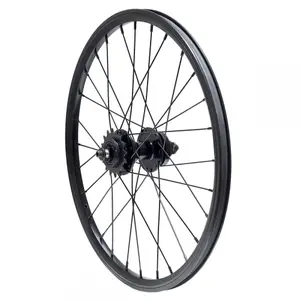
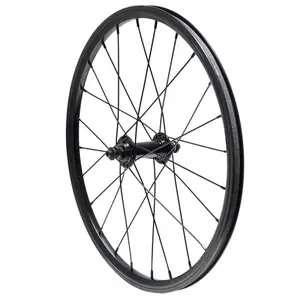


BMX wheels are chosen by rim diameter, axle and hub. For race, light 20-inch wheels in 406 or 451, often with a 10 mm axle and a cassette hub; for freestyle, reinforced wheels with a 14 mm rear axle and a 9-tooth driver or a freecoaster. Front wheels, rear wheels, wheelsets and 24-inch cruiser wheels are all gathered here.
Race or freestyle BMX wheels: what sets them apart
In race, the wheel has to pick up speed quickly out of every turn: double-wall aluminium or carbon rims, light hubs with 10 mm axles, 28 or 36 spokes. The rear cassette hub takes a separate cog, often to the Shimano standard, and the wheel works with a rim brake, sometimes with a disc as well.
In freestyle, strength comes first: 36 spokes, reinforced rims, a 14 mm rear axle on which the pegs are fitted, and a 9-tooth driver that allows a small chainring. The front wheel often stays on a 10 mm axle, or 3/8 inch.
406, 451 or 507 rim: which diameter?
The vast majority of BMX bikes run on 20-inch rims with a 406 diameter, compatible with tyres in decimal sizes, from 20 x 1.50 to 20 x 2.40. The larger 451 diameter takes tyres marked 1-1/8 or 1-3/8: it is mainly found on race bikes for young riders. For a 24-inch cruiser, the rim moves up to 507 mm. These diameters are not interchangeable: the wheel follows the frame, the fork and the brake pads.
Rear hub: cassette, freecoaster or freewheel
Most of the rear wheels on this page have a cassette hub, whose body houses the drive mechanism. Freestyle wheels specify their drive side, RSD or LSD (right or left): it must match that of your crankset. Freecoaster wheels, marked FC, let the wheel roll backwards without turning the pedals, for tricks ridden backwards. Entry-level wheels sometimes keep a threaded freewheel, simpler and more affordable.
Brakes, axles and spacing: the compatibility checks
- Brake: a rim with a machined braking surface for brake pads, or a hub with a disc mount, CenterLock or 6-bolt, if the frame has a calliper mount.
- Axle: 10 or 14 mm, with nuts or bolts depending on the hub; measure the width of your frame and fork dropouts.
- Spacing: race rear hubs come in 100 and 110 mm; measure the distance between the dropouts of your frame.
- Cog: a Shimano-standard cassette body accepts many race cogs, whereas a freestyle driver is built into the hub.
Tyres, inner tubes and other wheels
Once the rim is chosen, take your BMX tyres in the same diameter and your BMX inner tubes with the right valve type. Pumps and accessories take care of maintenance. For a bike with gears, bike wheels cover every other size.
Which BMX wheel brands should you choose?
Sun Ringlé offers its BMX wheels in the three 20-inch sizes, 1-1/8, 1-3/8 and 1.75, as front and rear wheels.
Excess designed the XLC for race, in Mini and Expert versions: double-wall 6061-T6 aluminium 451 rims, 10 mm axles, Shimano-standard cassette, 28 or 36 spokes, compatible with rim brakes and CenterLock discs; the EXE-3 comes in Pro and Cruiser versions.
Eclat fits its Cortex Evo hub to freestyle rear wheels, in cassette or freecoaster, with right or left-hand drive, on E440, Trippin or Bondi rims.
Salt offers the Everest, a rear wheel with a 9-tooth cassette and a 14 mm axle, also available as a freecoaster, and the Rookie, designed for beginners.
Pride Racing reserves for racing the Wave Fusion, with Toray T700 carbon rims, and the Control, in rim brake or disc versions, up to the 507 diameter of cruisers.
BMX wheels on sale
An end-of-line wheel ends up in BMX clearance, a newly listed one in new arrivals. Black Friday remains a good time for a pair of race wheels, one of the most expensive parts of the bike.
Frequently asked questions
What size wheels should you get for a BMX?
20 inch is the standard, from junior to adult riders, in race and freestyle alike. Cruisers and BMX bikes for taller riders move up to 24 inch, and the youngest start on 12 to 18-inch wheels. For a replacement wheel, check the diameter printed on the tyre sidewall.
Race wheel in 451 or 406?
Stick with your bike's original equipment: the frame, fork and brakes are set up for one diameter. The 451 takes narrow, light tyres, the 406 wider tyres that are more comfortable and come in a wider choice.
What do RSD, LSD and FC mean on a rear wheel?
RSD and LSD indicate the side of the cog, right or left, as do RHD and LHD. CS refers to a cassette wheel and FC to a freecoaster wheel.
Can you switch to a disc brake on a BMX?
Yes, if the hub has a disc mount and the frame or fork has calliper mounts. Without these mounts, keep a rim brake on a rim designed for it.
Is a freecoaster suitable for beginners?
It is mainly aimed at riders working on tricks ridden backwards. Its slack before the drive engages is surprising at first; to learn, a cassette wheel gives a more direct response.