BMX gloves for race, freestyle and kids


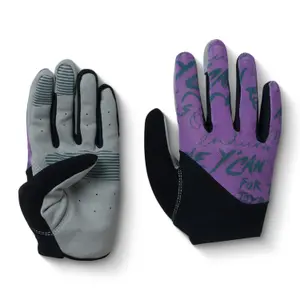


BMX gloves cover the fingers right to the tips, as racing rules require, while keeping a thin palm so you can feel the grips. For race as for the park, choose between a slip-on cuff with no fastening, quick to pull on, and a hook-and-loop closure, then take a snug size: a glove that is too big wrinkles in the hand. Adult, women's and kids' models.
Why wear gloves for BMX?
In a fall, the first reflex is to put your hands out: gloves then protect your palms from abrasion on dirt, concrete or the wood of a ramp. They also improve your hold on the grips when your hands sweat, at the start as on jump landings, and prevent blisters during long sessions. In BMX racing, they are compulsory and must cover the hands right to the fingertips: fingerless mitts are not accepted.
Thin palm or reinforced glove?
A BMX glove generally has a thin palm, often in Clarino, a supple synthetic leather that lets you feel the grips. The back is made of stretch fabric or airy mesh. Some models add silicone on the fingertips that operate the brake, reinforcements on the index finger and thumb, or a microfibre thumb to wipe away sweat. Thicker gloves, with knuckle guards, come from motocross and downhill: more protective, they reduce feel.
Cuff, size and fit
A slip-on cuff with no fastening pulls on like a sock and leaves no hook-and-loop tab to rub the skin; a hook-and-loop closure fits a slim wrist better and makes it easier for younger riders to get dressed. For the size, measure the width of the palm at knuckle level, or the length of the hand, according to the brand's size chart. The glove should hug the hand without squeezing the fingers, with your fist closed on the grip.
Completing the rider's kit
Gloves go with long-sleeved BMX race jerseys, whose sleeves must reach the wrists, and with BMX race pants. Protect your head with a BMX helmet. For the trails, see mountain bike gloves.
Which BMX glove brands should you choose?
Fist Handwear, an Australian brand founded by motocross rider Sam Moore, designs its gloves with riders and artists, hence its very recognisable graphics; the Stocker comes in adult, youth and kids' sizes.
Fuse, a BMX protection specialist, offers the Chroma gloves, with a synthetic leather palm, silicone on the brake fingers and a microfibre thumb, as well as the Alpha and the Echo, including kids' versions.
Evolve, a French BMX race brand whose SI2 pants were developed with elite rider Michael Bias, offers SI2 gloves in kids' sizes.
Shot Race Gear, a French off-road brand based in the Eure, designs the rider's complete kit, from motocross to BMX, full-finger gloves included.
Endura, a Scottish cycling clothing brand, offers the Hummvee Lite Icon, a full-finger glove from its mountain bike range, in a women's version.
BMX gloves on sale
Colours that are not carried over move to BMX clearance, and the latest models join new arrivals. Gloves wear out quickly: make the most of the sales to get a spare pair.
Frequently asked questions
Are gloves compulsory in BMX?
In BMX racing, yes: UCI rules require all riders on the track to wear gloves whose fingers completely cover the fingertips. In freestyle, nothing requires them, but they protect the palms and improve your hold on the grips.
What is the difference between BMX gloves and mountain bike gloves?
They are very similar: full fingers, thin palm, airy back. Some mountain bike gloves add gel inserts or padding for long rides, whereas BMX gloves favour feel over short efforts.
How do you choose the size of BMX gloves for a child?
Measure their hand and take the matching size, never larger: a glove that is too big wrinkles in the palm and makes the hands slip. A hook-and-loop closure helps the child put them on alone.
Are motocross gloves suitable for BMX?
Yes, if they cover the fingers fully. They are often thicker and warmer: for the track, a light glove with a thin palm keeps more feel.
When should you replace your BMX gloves?
As soon as the palm wears thin or gets a hole, or a seam gives way at the fingertips. A worn glove no longer protects against abrasion and slips on the grip.