
BMX sprockets and chainrings, race and freestyle
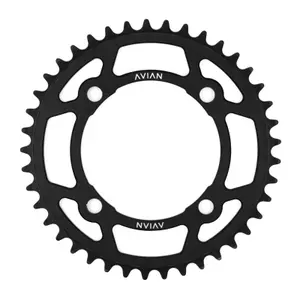
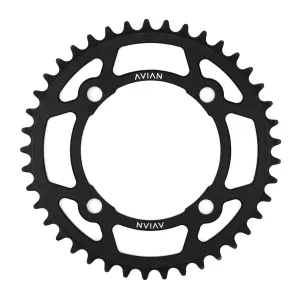
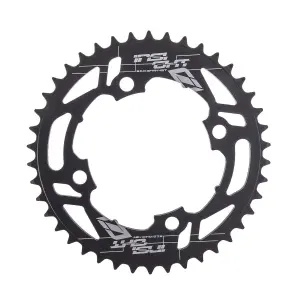
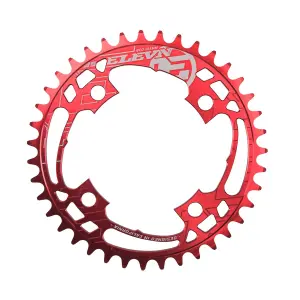



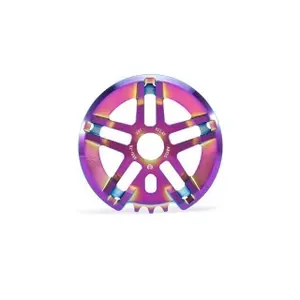
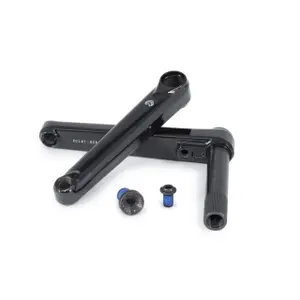
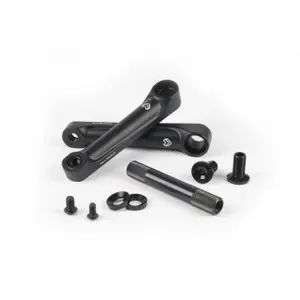
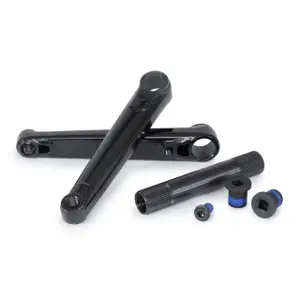
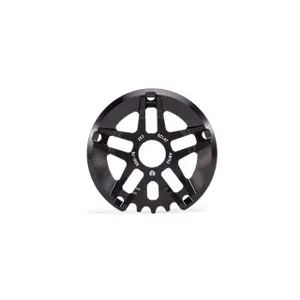
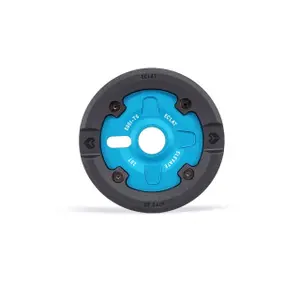
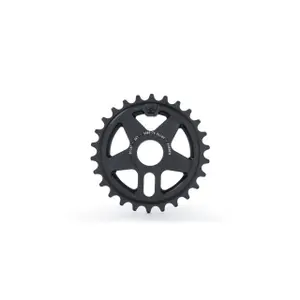
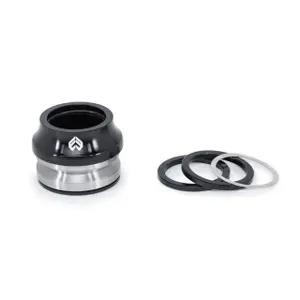
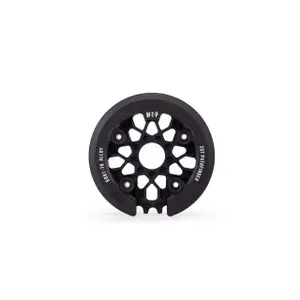
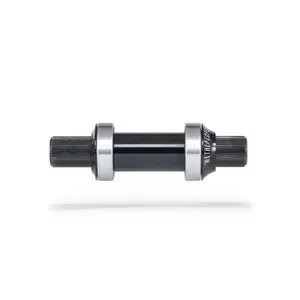

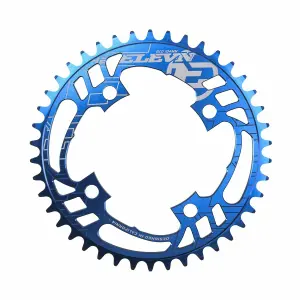
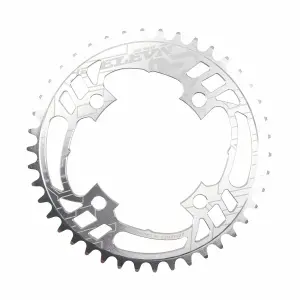
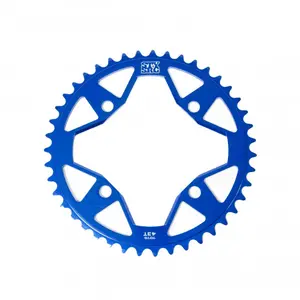


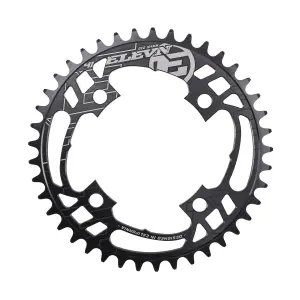
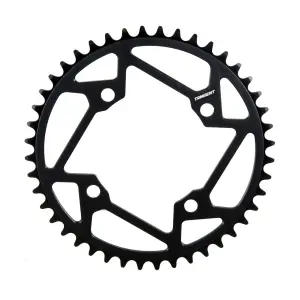
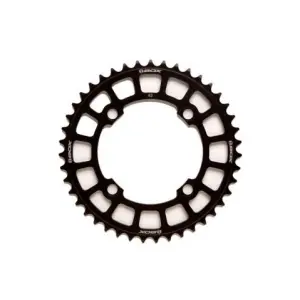

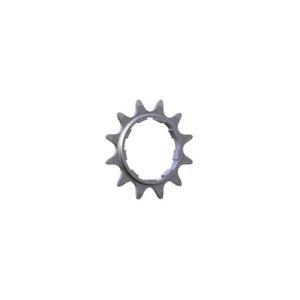
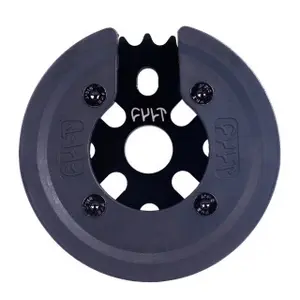
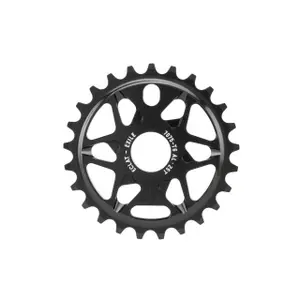

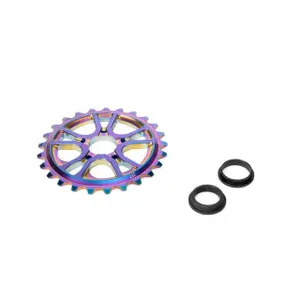
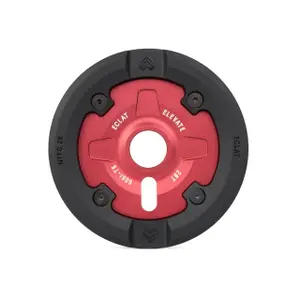
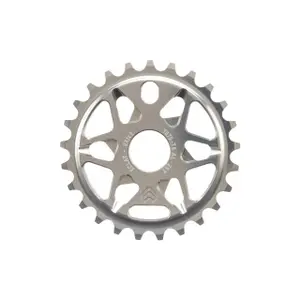
The BMX sprocket, the single chainring on the cranks, sets your gear ratio together with the rear cog. In racing, it bolts onto the crank spider and has roughly 35 to 50 teeth; in freestyle, it slides onto the spindle and comes down to 25 or 28 teeth to gain ground clearance. Check the fitting, the spindle diameter and the chain width before choosing.
What does a BMX sprocket do?
With no derailleur or cassette, a BMX has only one gear, determined by the number of teeth on the sprocket divided by the number on the rear cog. With 44 teeth at the front and 16 at the back, the wheel turns 2.75 times for each turn of the cranks. A freestyle set-up of 25 teeth on a 9-tooth cog gives an almost identical ratio, around 2.78, with a much smaller sprocket: it weighs less and clears obstacles more easily. That is the whole logic of the range: racing looks for the best acceleration out of the gate, freestyle for a comparable gear in a smaller package.
Race chainrings: BCD, teeth and fine-tuning
Race chainrings are fixed to the crank spider, most often with 4 bolts on a 104 mm diameter circle, sometimes with 5 bolts on 110 mm: check your cranks' BCD first. They are machined from aluminium, 7075 being harder than 6061, and their thickness, from 4 to 5 mm, affects the chain line.
Some chainrings are tapped: the bolts screw directly into the chainring, with no nut at the back. Others come in decimal sizes, 41.7 or 43.2 teeth for example: the tooth profile is reworked to give a ratio between two whole sizes, a very fine adjustment sought by experienced racers.
Freestyle sprockets: on the spindle, with or without a guard
In street, park or dirt, the sprocket slides directly onto the spindle of the three-piece cranks. It is locked either by a bolt that fixes it to the arm (bolt drive) or by the splines of the spindle (spline drive). Most models accept 19 and 22 mm spindles, or even 24 mm, thanks to the adapters supplied. Sizes of 25 and 28 teeth dominate, paired with a 9-tooth rear cog.
A guard sprocket is surrounded by a protective ring, machined from the solid or bolted on in nylon, which covers the teeth. During grinds on a ledge or a rail, it is the guard that rubs, not the chain, which stays on. A nylon guard wears but can be replaced, and slides better on concrete.
BMX sprocket sizes, gear ratio and chain width
A smaller gear makes starts and technical tracks easier, a bigger gear serves long straights. One more tooth on the sprocket changes the ratio far less than one tooth fewer on the cog: so it is at the front that you fine-tune. Your club coach remains the best source of advice when starting out.
Finally, the sprocket must match the chain. The wide 1/8 inch format is the standard for freestyle and children's BMX bikes; the narrow 3/32 inch format lightens the drivetrain in racing. A narrow chain will not fit over the thick teeth of a 1/8 sprocket, and a wide chain floats on a narrow sprocket, at the risk of coming off. Some race chainrings, however, accept both widths.
BMX cranks, cogs and chains
The spindle diameter and BCD are given on BMX cranks; for the rear cog, the freewheel and the chain that complete your gearing, see the chains, cogs and freewheels page. The BMX drivetrain section brings everything together, and bike chainrings cover drivetrains with several gears.
Which BMX sprocket brands to choose?
Wethepeople, a freestyle BMX brand based in Cologne, offers the Pathfinder, an 8 mm thick sprocket in machined 6061-T6 aluminium, with a matching guard and adapters for 19, 22 and 24 mm spindles, as well as the Logic and the Patrol.
Rennen, a racing specialist, taps its 4-bolt chainrings to do away with nuts and offers them in decimal sizes, from 41.2 to 44.7 teeth on this page.
Eclat machines the Abyss Guard from 7075-T6 aluminium, with the guard cut from the solid, in 25 or 28 teeth; the Elevate Guard combines a 6061 sprocket with a nylon guard.
Elevn designs its Flow chainring for racing: machined 7075-T6 aluminium, 4 bolts on 104 mm, 3/32 inch chain, from 38 to 50 teeth.
Salt Plus, the high-end line of the Wethepeople family, drills its Manta with four mounting holes: rotating it by one position spreads the wear on the teeth.
BMX sprockets on sale
Discontinued colours and end-of-line sizes pass through our BMX clearance, while new arrivals present the latest sprockets listed. The seasonal sales and Black Friday are a chance to try a different gear.
Frequently asked questions
How many teeth for a BMX race chainring?
A 44-tooth chainring paired with a 16 or 17-tooth cog was long the reference for adults; younger riders run smaller gears. The right gear depends on the track, your power and your cadence: test it in a gate start session.
How do you calculate a BMX gear ratio?
Divide the number of teeth on the sprocket by the number on the rear cog: 44 over 16 gives 2.75. To compare two bikes with different wheels, multiply this ratio by the wheel circumference, which gives you the distance covered with each turn of the pedals.
Does a race chainring fit freestyle cranks?
No, in general. A race chainring bolts onto a spider, a freestyle sprocket slides onto the spindle: the two fittings are not interchangeable. Check the description of the cranks and the sprocket before ordering.
Does a new sprocket need a new chain?
It is advisable if the chain has stretched: a worn chain quickly wears new teeth and can skip under load. Also remember to recut the length if you change the number of teeth significantly.
Sprocket or chainring: what is the difference?
None in technical terms. In BMX, sprocket is the usual word for the single chainring on the cranks, particularly among freestyle riders.