Gravel plateaus mono, double and adaptable


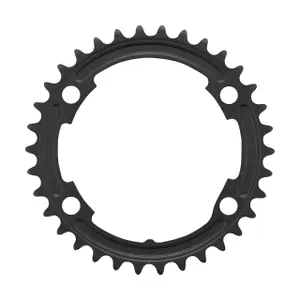


A gravel chainring is replaced according to your crankset attachment: four bolts at 110 mm, a small chainring from a double at 80, 90, or 94 mm depending on the brands, or direct mounting on the crank. Then choose between a single chainring with alternating teeth, which keeps the chain without a front derailleur, and a short double chainring with finer gaps. Chainrings Shimano GRX, Sram, and adaptable models are collected here.
Why change the chainring on a gravel bike?
On the trails, the chain collects sand, dust and mud, which act as an abrasive between the links and the teeth: a gravel chainring wears out faster than one on a bike that stays on the road. Replacing it brings back a quiet transmission and prevents a new chain from skipping when you put in a lot of effort. Changing the chainring also allows you to adjust your gear ratios without touching the rest of the group: fewer teeth before a heavy trip or a mountainous route, and more teeth for a rolling event. Some single chainrings even allow you to convert a double crankset into a single chainring setup.
Single gravel chainring: tooth profile, chainline and offset
Without a front derailleur to guide it, the chain only stays on a single chainring thanks to its tooth profile: tall teeth with an alternating shape, wide for the outer links and narrow for the inner links. When paired with a rear derailleur with a clutch, which keeps the chain taut on bumpy terrain, this profile helps prevent most derailments on rough paths. In contrast, the large chainring of a double setup isn’t suitable for standalone use: its ramps and pins, designed to lift the chain during gear changes, can make it fall off over bumps.
The lateral position of the chainring is just as important as its number of teeth. Gravel cranksets place the chain further out than road ones, to create space for the tyre between the frame's chainstays: with Shimano, the GRX chainrings are offset by 2.5 mm. In a direct mount, this offset is built into the chainring and varies depending on the crankset and the spacing of the rear hub. A poor choice will cause the chain to run at an angle on the extreme sprockets, leading to noise and faster wear.
Double gravel chainring: short combinations on clean fittings
To get below the 34 teeth of compact road cranksets, double gravel chainrings often mount the small ring on a smaller diameter than the large one. The Shimano GRX FC-RX810-2 cranksets feature a 48-tooth on 110 mm and a 31-tooth on 80 mm, the Omega Adventure cranksets from FSA have a 46 and 30 tooth on 120 and 90 mm, and Wide versions from Sram come with a 43 and 30 tooth on 94 mm, with an enlarged chainline that requires the corresponding Wide front derailleur. Other setups, like the double Sram Rival E1 46/33 in direct mount, come as a pair.
In practice, check the fitting of each of your two chainrings before ordering: the measurement of the large one doesn’t indicate that of the small one. It also limits the possible combinations, as a 30 or 31 tooth won’t fit on a 110 mm fitting. If you keep the front derailleur, stay within the tooth range it accepts and adjust its height for the new large chainring.
Speeds, crankset and tyre: compatibility to check
- Number of speeds: the chain narrows from 10 to 13 speeds, and the chainring must be shaped to fit yours.
- Fitting: number of arms and diameter, usually stamped on the chainring, or direct mount specific to a brand and crank model.
- Clearance: a larger chainring gets closer to the right chainstay and the rear tyre; on a bike with wide tyres, check the remaining space before adding teeth.
- Usage: an aero chainring with a full surface aims for speed on rolling courses, while an oval chainring is for traction on climbs over loose terrain.
The listing includes gravel, road, and a few models for electric bike motors: rely on your crankset’s reference rather than just the number of teeth.
Which gravel chainring brands to choose?
Shimano devotes its GRX range to gravel, with replacement chainrings following the offset chainline of FC-RX810-2, FC-RX600 or FC-RX820-1 cranksets, in both single and double.
Specialités T.A. designs and manufactures its chainrings in Sissonne, Aisne; for GRX RX600 and RX810 cranksets, the brand offers the One X110 single chainring and a small X80 chainring for doubles.
Stronglight, a French brand, offers adaptable gravel chainrings: a single 42-tooth chainring compatible with Campagnolo Ekar 13-speed cranksets and single CT2 chainrings with five arms for Sram Red, Force and Rival cranksets.
FSA reserves its Adventure cranksets for gravel, whose replacement chainrings come in 46 and 30 teeth, on 120 and 90 mm, featured on this page alongside its K-Force, Gossamer and Energy road chainrings.
Sram shapes its X-Sync chainrings with wide and narrow alternating teeth for single chainrings, from Rival to Red E1, including in aero version, and offers double gravel chainrings like the 46/33 from Rival E1 or the 43/30 from its Wide versions.
Rotor, a Spanish manufacturer, offers single chainrings with four arms of 110 mm in 40, 42 or 44 teeth, round with Round Rings or oval with Q-Rings, longer in the power phase.
Discounted gravel chainrings
Chainrings from a replaced group generation often go through road clearance, which also hosts gravel transmission parts; recently added references can be found in the new arrivals. French Days and Black Friday are well-timed to prep a transmission before long rides.
Frequently asked questions
Single or double chainring for gravel: what to choose?
The single chainring simplifies the bike, removes the front derailleur and holds the chain better on rough terrain, at the cost of larger gaps between gears. The double chainring maintains fine gaps, appreciated by those who ride for long periods on the road or in groups. Your choice mostly depends on your current crankset and the terrain you ride on.
What size single chainring to choose for gravel?
Start with the chainring mounted originally and your feelings: if you feel short of gear climbing, remove two teeth; if you spin out on the flat, add two. The chainring changes all the ratios of the cassette at once, while changing the cassette mostly affects its extremes.
Can you put a road chainring on a gravel bike?
Yes, if the fitting, number of speeds and position match your crankset. However, be careful with the chainline, which is further out on a gravel crankset, and with the large chainring of a double used alone, which poorly retains the chain. To ride in single chainring setup, choose a chainring with alternating teeth.
Does an aero chainring have any benefit in gravel?
Its gain comes from the airflow around the crank: it's felt at high speeds, on fast gravel events and long stretches of road. On slow and technical paths, the benefit is low, and the tooth profile matters more than the shape of the chainring.
When should you change a gravel bike's chainring?
When the teeth thin and curve, or when a new chain skips under load while the cassette is healthy. Monitoring chain elongation with a measuring tool and replacing it in time significantly delays wear of the chainring, especially after rides in mud or sand.