City bike speed cable, Nexus and casing
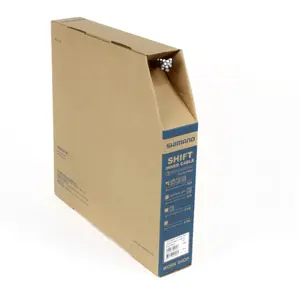
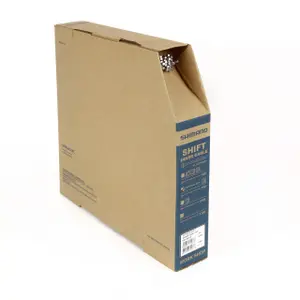


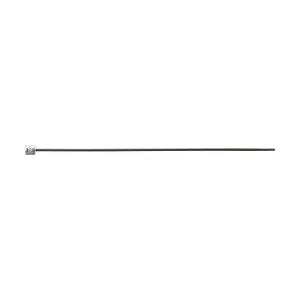
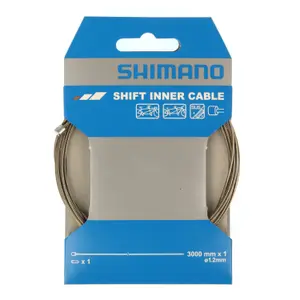
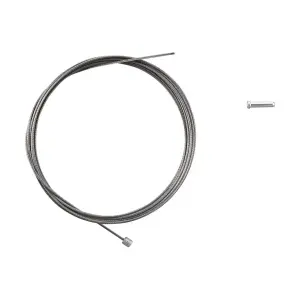




A city bike brake cable connects the handle or lever to the derailleur, or to the hub with integrated gears like the Shimano Nexus. Parked outside and exposed to rain, it eventually oxidises and stiffens the control: replace it along with its sheath, choosing a stainless steel or coated cable, at the right length for your frame.
Why does the gear shift get stiff on a city bike?
A city bike spends time outdoors: parked in the rain, splashed by the wet road, it allows water to seep into the cables through their ends. The cable rusts, rubs against its housing, and the grip becomes stiff; the gears skip or refuse to shift, and the adjustment won't hold. On a city frame, the cable often runs from the high handlebars down to the rear hub, along the length of the bike, which increases friction points. When these symptoms appear, replacing the cable and housing restores a smooth operation.
Derailleur or hub with integrated gears: which cable?
Two types of transmissions are found on city bikes. With a derailleur, the cable moves the chain from one sprocket to another, like on a mountain or road bike. With a hub that has integrated gears, like the Shimano Nexus, the gears are enclosed in the rear wheel: the cable runs from the twist grip down to a small box attached to the hub, allowing shifts even when stationary. The inner cable remains a gear cable, but it needs to slide smoothly over a long distance: Elvedes offers a cable with 19 strands, which is more flexible, designed for Nexus hubs. On these hubs, the tension is adjusted by following the manufacturer's instructions.
Stainless steel, coated or multi-strand: choosing the cable
- Stainless steel cable: it resists corrosion, a plus for a bike parked outdoors, like the XLC SH-X02 Nirosta with a diameter of 1.1 mm.
- Coated cable: a smooth surface, like that found on the Shimano Optislick, reduces friction in the housing and softens the grip.
- Flexible multi-strand cable: more strands, with 19 on some models, facilitate movement through a long and winding housing.
Also check the end of the cable, which should match your gearing; the XLC SH-X18 is claimed to be compatible with Shimano, Campagnolo, and Sram. Lengths range from about 2 m to 3 m: the shorter one is suitable for a standard frame, while the longer one is for a cargo bike or extended frame, like the Shimano cable of 3,000 mm.
Housing, ends, and caps: ensuring a smooth passage
A gear housing should never be replaced with a brake housing, which would compress under tension and misalign the gears. Cut it cleanly, put an end cap on each side, and make wide curves around the handlebars and luggage rack, avoiding tight loops that would pinch the cable. On a city bike, where the housing is often exposed, a closed end or a rubber cap at the entrance minimizes water intrusion. Complete kits, including cable, housing, and ends, allow you to renew everything in one go and prevent an old housing from wearing out the new cable.
Electric bike: gear cable and electric cables
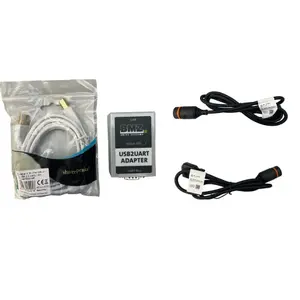
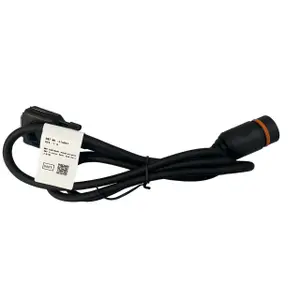
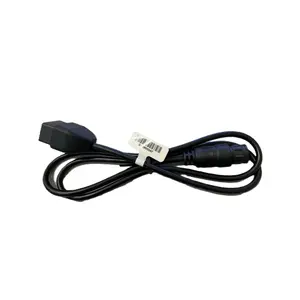
On a city electric bike, the gear cable is replaced just like on a regular bike, but it works harder: ease off on the pedals for a moment when shifting to protect the transmission. This page also includes some electric cables, for the battery or connections to a diagnostic computer, intended for workshop maintenance. For the record, a bike whose assistance remains active above 25 km/h is referred to as 'unlocked' and is not allowed to be used on public roads, as stated by service-public.gouv.fr.
Cables and housings for other bikes
For a road bike, road gear cables are suitable for levers integrated into the brake levers; for off-road use, see the MTB derailleur cables. For cable brakes, spiral housings are categorized under road brake cables or, for a mountain bike, under MTB brake cables and housings. For the rest of your city bike's transmission, check out the urban derailleurs and cassettes and chains.
Which gear cable brands to choose?
Shimano provides cables for its own controls: Optislick cables with a smooth coating, stainless steel cables of 2,100 mm, a cable of 3,000 mm for larger frames, and adjustment parts for its controls, like the screw unit of the SL-8S31.
Jagwire, a specialist in control components, classifies its derailleur cable kits by transmission, 1X for one chainring and 2X for two, and by level, Sport, Pro, or Elite; they combine very smooth cables with low-friction inner housings.
XLC, a parts and accessories brand under the Accell group, offers the stainless steel cable SH-X02 Nirosta, the cable SH-X18 compatible with the three major transmission manufacturers, and kit SH-X04, which includes cable, housing, and accessories.
Elvedes, a Dutch supplier of bike parts, has designed a 19-strand cable with enhanced flexibility for Shimano Nexus hubs, made for everyday use in the city, on tours, or on electric bikes, and also sells its Superflex cables in workshop boxes.
Discounted cables and housings
The cables and kits replaced by a new reference are included in the urban transmission clearance; to spot newly arrived parts, check the new arrivals. The winter sales are a great time to freshen up your controls before the nice weather.
Frequently asked questions
How can I tell if my bike has an integrated gear hub?
Look at the rear wheel: an integrated gear hub is larger than a standard hub, has only one sprocket, and does not require a derailleur. The cable connects to it via a small box attached to the side of the hub, often featuring its name, like Nexus, written on the body.
Why has my gear shift handle become stiff?
Most often, the cable has rusted or the housing has become dirty. If the handle remains stiff once the cable is detached, the control itself is to blame; otherwise, replace both the cable and housing together.
Is a stainless steel cable worth it for a bike parked outdoors?
Yes: stainless steel resists moisture better than galvanized steel, and the controls stay flexible for longer. Paired with a new housing and well-fitted ends, it extends the time between replacements.
Can I change a Nexus hub cable myself?
Yes, with a gear cable, a cable cutter, and the manual for the handle and hub, which describes how to adjust the tension. If the gears don't align correctly after assembly, a shop can quickly make the adjustment.
Do the electric cables on an electric bike get replaced like a gear cable?
No. Battery, motor, or diagnostic cables are specific to each system and connect as per the manufacturer's instructions; when in doubt, have an experienced workshop handle the intervention for your bike's system.