Electric bikes for the city: folding and cargo


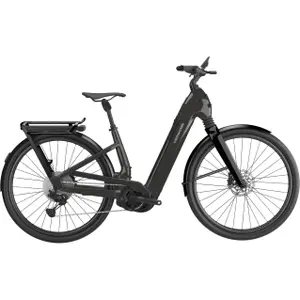


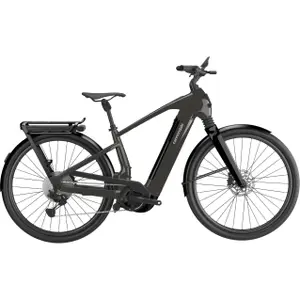


An electric bike gets you to work without arriving out of breath, whatever the hills on your commute. Start by choosing its shape: a step-through frame if you get on and off often, a folding bike for the train or a small flat, a cargo bike for the children and the shopping. Then compare the motor, the battery and the drivetrain, chain or belt.
What does electric assistance change on your daily journeys?
An electric city bike adds assistance to your pedalling: pulling away at traffic lights, climbing hills and riding into a headwind take much less effort, and you reach your destination without needing to change. For short trips, it takes the place of the car, the bus or the underground, at a steady pace that makes journey times predictable. Urban models add what everyday traffic calls for: mudguards, lights often powered by the battery, a rear rack, a kickstand and an upright position that lets you see far ahead.
250 W and 15.5 mph: the rules for electric bikes
In the UK, an electric bike is treated as an ordinary pedal cycle when it is an electrically assisted pedal cycle, or EAPC: it has pedals that can propel it, its motor has a continuous rated power of no more than 250 W and it must not propel the bike above 15.5 mph (25 km/h). As gov.uk explains, it then needs no licence, registration, tax or insurance, and you can ride it on cycle paths and anywhere else pedal bikes are allowed. In the European Union, and therefore in Ireland, an electric pedal cycle has a motor of 250 W at most, whose assistance stops when you stop pedalling and cuts out before 25 km/h. In the United States, the federal definition of a low-speed electric bicycle allows a motor of under 750 W and a top speed of under 20 mph on the motor alone.
In the UK, an electric bike whose motor assists beyond 15.5 mph or exceeds 250 W is classed as a motorcycle or moped: it must be registered, taxed and insured, ridden with a driving licence and a motorcycle helmet, and it can no longer use cycle lanes or cycle tracks. Removing the speed limiter therefore changes the legal status of the bike. As for cycle helmets, the Highway Code recommends wearing one without making it a legal requirement; the rules vary from one country to another.
Motor, sensor, battery: reading the spec sheet
Two motor positions dominate in town. A hub motor, housed in the rear wheel, drives the wheel directly: simple and discreet, it leaves the cranks free and pairs well with a single-speed drivetrain or a belt. A mid-drive motor, placed at the bottom bracket, works through the chain and makes use of the bike's gears: it keeps the weight low and central and copes well with steep hills, but the chain and sprockets work harder.
The sensor decides how the bike feels. A torque sensor measures the force you put through the pedals and adjusts the assistance in proportion: the bike responds like an extension of your legs. A cadence sensor triggers the assistance as soon as the pedals turn, more abruptly and with less nuance. Battery capacity is expressed in watt-hours (Wh): the higher the figure, the greater the range, although hills, the assistance level, the load you carry and the cold make it vary a great deal. A removable battery can be charged indoors, at home or at work, without carrying the bike upstairs.
Step-through, folding or cargo: which electric city bike should you choose?
- Step-through or low frame: the lowered top tube lets you get on without lifting your leg, which helps when stops come one after another or when you ride in everyday clothes.
- Frame with a horizontal top tube: stiffer for the same size, it suits riders who go fast and far, or who sometimes take to tracks.
- Folding: with its small 16 or 20-inch wheels, it folds up to go on a train, in a car boot or in a lift. It still weighs as much as an electric bike: check that you will be able to carry it.
- Cargo: a box at the front or an extended rear rack carries children and shopping, and the assistance makes the load manageable on hills.
- All-road: a suspension fork and wider tyres soak up cobbles, riverbanks and towpaths.
The drivetrain matters as much as the frame. A derailleur offers plenty of gears and is easy to repair. A hub gear keeps the mechanism away from mud and lets you change gear at a standstill, handy at traffic lights. A belt replaces the chain: it needs no lubricating, does not mark your trousers and requires little maintenance, but it needs a frame designed for it.
What size electric city bike do you need?
Frame size is read from each brand's chart, based on your height and sometimes your inside leg, in S, M, L or in centimetres. On a frame with a horizontal top tube, you should be able to stand over the tube without touching it. On a step-through frame, standover is no longer a constraint: it is the distance between saddle and handlebar that should keep your back straight and your arms slightly bent. If you are between two sizes, the smaller one is more manoeuvrable in traffic, the larger one more stable on long journeys. Folding bikes usually come in a single size, offset by a seatpost and a stem that adjust in height.
All city bikes
For short, flat journeys, a bike without assistance may be enough: city bikes, electric or not, can be compared on a single page.
Which brands for an electric commuter bike?
Tenways pairs a rear hub motor, controlled by a torque sensor, with a carbon Gates belt that replaces the chain on its CGO600; the CGO800S and the AGO Air complete the range offered here.
Sunn, a French manufacturer, designs and assembles its bikes in Machecoul, in the Loire-Atlantique department. Its Skill models for the city get a Bosch Active Line Plus motor and a rack integrated into the frame; the Start and the On complete its urban range.
UTO, a manufacturer from Lyon previously known as Eovolt, specialises in folding electric bikes: 16 or 20-inch wheels, an OG series with a chain and a PRO series with a belt.
Cannondale, an American brand, makes the FlyingV, an urban bike with a carbon frame, a Bosch Performance Line SX motor, a Shimano Nexus Inter-5E hub and a Gates belt. Its Mavaro and Tesoro come in a Low StepThru version, with a very low frame.
Atala, an Italian company founded in Milan and now based in Monza, fits Bosch motors to its B-Easy models, designed for the city, and to its touring-oriented B-Tour; the range also includes a folding model, the E-Folding.
Electric city bikes on sale
A replaced model year or a discontinued colour is enough for an electric bike to join the urban outlet; newly listed models can be found in new arrivals. To replace an old commuting bike, also keep an eye on Black Friday and the summer sales.
Frequently asked questions
Does an electric bike need to be registered?
In the UK, no, as long as it is an EAPC: a motor of 250 W at most that stops assisting above 15.5 mph. A model whose motor goes faster or is more powerful is classed as a motorcycle or moped, which must be registered, taxed and insured. Elsewhere, check the rules that apply where you ride.
Is a step-through electric bike only for women?
No. The step-through frame is often presented as a women's model out of habit, but it helps anyone who gets on and off the bike often, rides in everyday clothes or finds it hard to lift a leg. Choose it for the way you ride, then check the size in the brand's chart.
What range can you expect from an electric city bike?
It depends first on the battery's watt-hours, then on the assistance level you choose, the hills, your weight and the temperature. The ranges announced by manufacturers correspond to favourable conditions: for a daily commute, allow a margin, especially in winter, when the cold reduces the available capacity.
Can you ride an electric bike without assistance?
Yes. With the assistance switched off or the battery flat, an electric bike rides like a conventional bike, just heavier. Above the assistance limit, that is in fact how it rides: the assistance stops and only your legs move the bike forward.
How do you look after an electric bike battery?
Charge it at room temperature with the original charger and store it somewhere dry, away from frost and strong heat. For long-term storage, leave it partly charged rather than full or empty. In very cold weather, keep it indoors and fit it to the bike just before you set off.