BMX pegs freestyle for street and flat
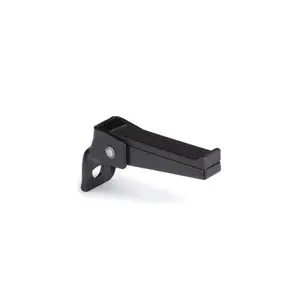


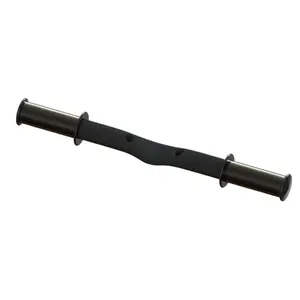


BMX pegs freestyle transform curbs, rails and skatepark ramps into playgrounds: you can slide on them in grind, balance on them, and in flatland, stand on them during tricks. Choose them based on your style, whether it's street, park, or flat, then according to their length, material and how they fit onto 14 or 10 mm axle sizes.
Street, park or flatland: each practice has its pegs
In street, pegs grind against raw concrete walls, steps and stair ramps: they wear out quickly and take hard hits on landing. Street riders therefore look for a robust peg, made of chromoly, or a thick plastic sleeve that they replace over time.
In park, grinds are done on the coping, the metal tube that lines the curves, and on boxes. Some skateparks only accept pegs with plastic sleeves, which are gentler on the edges: check the regulations of the place before riding. Finally, in flatland, pegs are not used for sliding but for balance: the rider places their feet on them to turn around the bike, often with four pegs and a surface that grips the soles.
Tricks done on pegs
- The double peg: both pegs on the same side slide together on the ledge or ramp, the basic grind.
- The feeble: only the rear peg slides, with the front wheel going over the obstacle.
- The smith: the rear peg slides while the front wheel comes down on the rider's side along the obstacle.
- The icepick: the rear peg slides alone, with the front wheel lifted, balancing on the back.
- The stalls: the rider comes to a stop for a moment, perched on one or two pegs, at the top of a curve or edge.
These tricks are first learned on a low and smooth ledge, at low speed, before progressing to ramps.
Length: 4 to 5 inches
Freestyle pegs typically measure between 4 and 5 inches, or around 10 to 13 cm. A longer peg offers more surface area for locking in a feeble or a smith and for placing the foot, at the cost of a few grams and a wider bike. A shorter peg remains more discreet underfoot. Many riders keep the same length at the front and back, to have the same reference regardless of the grind.
Rotation, sleeves and maintenance
A peg always wears out on the same face, the one that contacts the obstacle. Several metal pegs have multiple mounting positions: by turning them slightly, you can distribute wear and extend their life. On a peg with a plastic sleeve, it’s the sleeve that wears out; it can be replaced on its own, without changing the core, as long as you choose a sleeve from the same brand and of the same length.
After each session, check the tightness of the nuts or axle screws: a peg that turns or becomes loose puts stress on the axle and hub.
Mounting on axles and hub protection
The peg is mounted on the wheel axle, between the dropout and the nut. Many are drilled for a 14 mm axle and supplied with a ring for 10 mm axles. On the drivetrain side, a hub guard prevents the sprocket or freewheel from hitting the obstacle during the grind; on the opposite side, a hub guard also protects the flanges. If a hub’s axle is fixed with screws instead of nuts, ask the hub manufacturer for the solution to install pegs.
Other BMX components
Pegs are chosen along with the rest of the setup: BMX handlebars, grips and stems, not to mention BMX pedals and a fork capable of handling grinds. All the parts can be found in the BMX peripheral components. The child seat footrests listed here are also described on the pegs and footrests page.
BMX pegs on sale
Pegs and parts from previous collections go through the BMX clearance, and new models through the new arrivals. The summer sales arrive with the outdoor riding season, a good time to replace worn sleeves.
Frequently Asked Questions
What pegs should I choose to start street riding?
Two plastic sleeve pegs, mounted on the same side, at the front and back. They slide easily, forgive imperfect approaches and are accepted in most skateparks. You can switch to metal when your grinds are on rougher surfaces.
Should I mount my pegs on the left or right?
On the side towards which you naturally slide, as you choose your leading foot in skating. Try a few double pegs on both sides before deciding. If this side is the drive side, add a hub guard to protect the sprocket.
Are pegs allowed in skateparks?
It depends on the place. Many skateparks tolerate plastic pegs, which do not damage the coping, while some prohibit metal pegs. Read the posted regulations or ask the manager before your first session.
What's the difference between a street peg and a flatland peg?
The street peg is designed to grind: thick metal or slick sleeve. The flatland peg serves as a foot support during tricks: it must provide a secure grip, with a surface that sticks, and is often mounted in groups of four.
How can I stop a peg from loosening?
Make sure to tighten the nut or axle screw to the torque specified by the hub manufacturer, after verifying that the peg is properly flat against the dropout. Check the tightness after every session: a loose peg wears out the axle and can damage the dropout of the frame or fork.