BMX headsets for race and freestyle


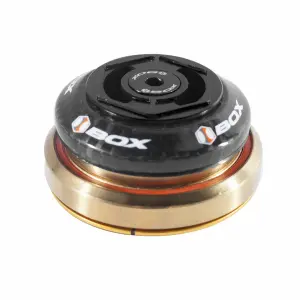


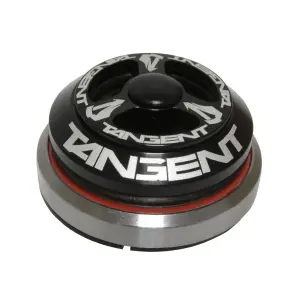
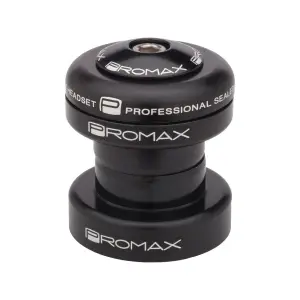


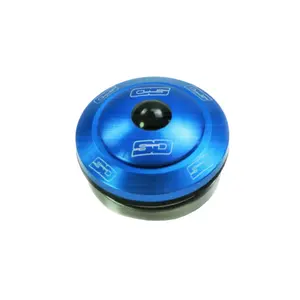


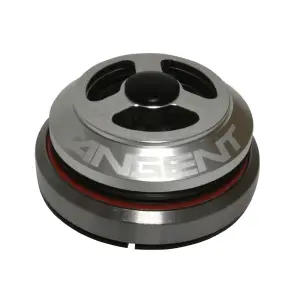


The BMX headset connects the fork to the frame and lets it turn without play. Most recent BMX bikes take an integrated headset, whose bearings sit directly in the head tube. First note the diameter of the fork steerer, 1 inch, 1 1/8 inch or tapered up to 1.5 inch, then choose the top cap height that suits your cockpit.
Why a headset specific to BMX?
BMX puts the steering through a hard time: landings from jumps, powerful starts from the race gate, side impacts in street and park riding. The headset must take these forces without developing play, on a frame with compact dimensions. BMX models almost all use sealed cartridge bearings, more resistant to dust and water than loose balls, and machined aluminium parts. The top cap height, which varies widely from one model to another, is also used to set the position of the bars.
1 inch, 1 1/8 inch or tapered: BMX headset sizes
Three steerer diameters coexist. The 1 1/8 inch is the standard for freestyle and for many race BMX bikes. The tapered steerer, which widens towards the crown up to 1.5 inch, is fitted to recent race frames, often with a carbon fork, for extra stiffness. The 1 inch is found on small race sizes and on older BMX bikes. The headset must match both the frame's head tube and the fork steerer: measure the frame bore at the top and the bottom, and the steerer with a calliper gauge, before ordering.
Race BMX: tapered integrated headsets and small sizes
In racing, the tapered integrated headset dominates on adult frames: it combines a 1 1/8 inch upper bearing with a 1.5 inch lower bearing. Some models come with two crown races, so you can also fit a straight 1 1/8 inch fork in a tapered head tube. For the youngest riders, reducer headsets take a 1 inch fork in a frame designed for 1 1/8 inch bearings. The contact angles of the bearings, 45 degrees or 36 degrees depending on the frame's bearing seat, can be checked on the original headset.
Freestyle BMX: top cap height, gyro and strength
In freestyle, the 1 1/8 inch integrated headset has become the norm. The difference lies mainly in the top cap: a low one brings the stem closer to the frame and keeps the cockpit compact; a tall one raises the bars without adding spacers. If you fit a gyro, check the total height available under the stem and the stated compatibility of the top cap. Old school and collectors' BMX bikes tend to use an external cup headset, often with a threaded 1 inch steerer: it is replaced with a part of the same standard.
How to install and adjust a BMX headset
On an integrated headset, the bearings drop into the frame by hand, clean and lightly greased; the crown race is pressed onto the steerer with a suitable tool. Fit the top cap and the spacers, then the stem without tightening it. Set the preload from the top until all play is gone without any tight spot, line the stem up with the wheel and tighten it to the stated torque. Check the adjustment after a few sessions, as new parts bed in.
Forks, stems and headsets on sale
A headset is chosen at the same time as the BMX fork, whose steerer it fits, and the BMX stem, which preloads it. The BMX handlebars complete the cockpit. For another bike, see our bike headsets in every standard. Parts from older ranges move to the BMX outlet.
Which BMX headset brand should you choose?
Elevn supplies its tapered integrated headset with two crown races, 1 1/8 inch and 1.5 inch, and offers a 1 inch reducer headset for junior riders' frames.
Eclat names its Wave integrated headsets after the height of their top cap, 6, 16 or 22 mm, to set the position of the bars; they run on sealed bearings.
Odyssey BMX, the Californian brand from Norwalk, offers its Pro integrated headset in a standard version and a High version, with a taller top cap, as well as a tapered version.
Box offers integrated headsets for racing, the tapered Box One from 1 1/8 inch to 1.5 inch and the Box Two, available here in 1 inch.
Frequently asked questions
How can you tell if your BMX has an integrated headset?
Look at the top and the bottom of the head tube: if nothing sticks out and only a thin top cap is visible, the bearings sit in the frame and the headset is integrated. Visible cups that stand proud of the tube indicate an external, non-integrated headset.
Can you fit a 1 inch fork to a 1 1/8 inch frame?
Yes, with a reducer headset designed for this purpose, which combines bearings sized for the frame with a race sized for the steerer. Check that the stem is also a 1 inch diameter.
When should you replace a BMX headset?
When the steering knocks on landing, catches as you turn the bars or will not stay adjusted. After a season of sessions in the rain, taking it apart to check the bearings is a must.
Do you need a special headset to fit a gyro?
There is no special standard, but height matters: the gyro goes under the stem, and the steerer must stay long enough. A low top cap leaves more room, and some manufacturers state compatibility with a gyro.
Does a race BMX headset suit freestyle?
Yes, if the diameters match the frame and the fork. Freestyle headsets focus on strength and offer more top cap heights; race headsets aim for low weight and stiffness.