BMX bikes: race, freestyle and cruiser


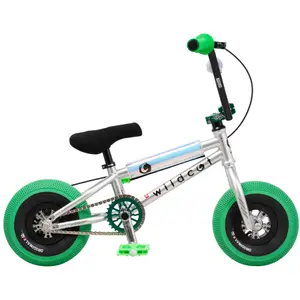
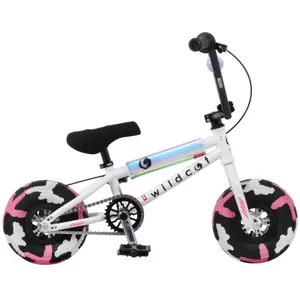
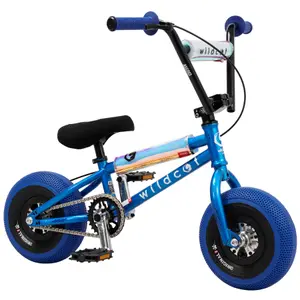
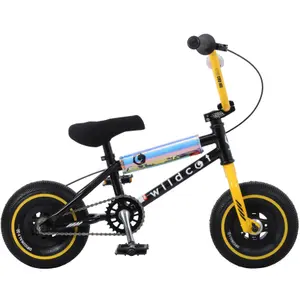
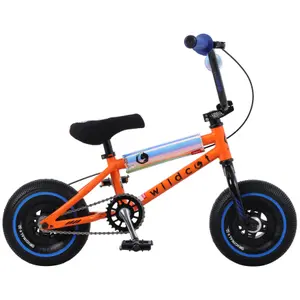
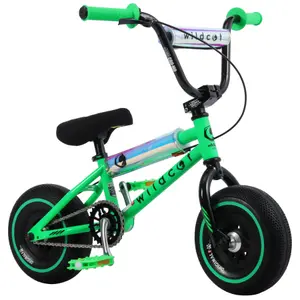
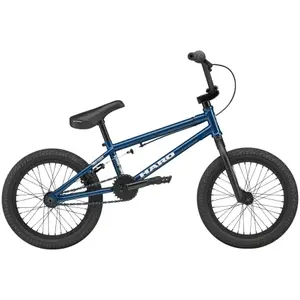
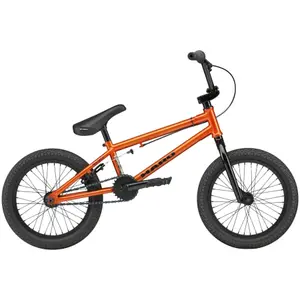
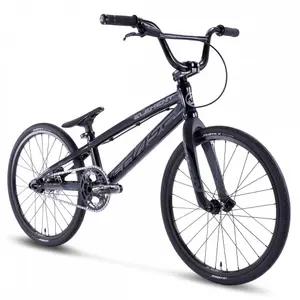
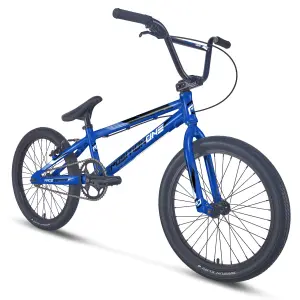


Choose a BMX bike first according to how you ride: racing on a track with a start hill, freestyle at the skatepark, in the street or on dirt jumps, or cruising on big wheels. Compare our complete BMX bikes in 20 inches and with big wheels, for children and adults alike, then choose your size by top tube length.
What is a BMX bike?
BMX, short for bicycle motocross, was born of the desire to recreate the jumps and banked turns of motocross on a bicycle. You can recognise it by its small frame, its 20-inch wheels in the standard version, its single gear and its construction designed to absorb landings. Children learn bike handling and balance on it, while teenagers and adults find a sport in its own right, for racing as well as for fun.
Race, freestyle or cruiser: which BMX for which riding?
A race BMX is designed for speed on a track lined with jumps and berms. Its aluminium frame is light and stiff, its tyres favour rolling speed, and it is braked at the rear by a hand brake: UCI regulations make this hand-operated rear brake compulsory in competition, a front brake being optional, and do not allow multiple gears. Races are run on standard 20-inch bikes and on 24-inch cruisers.
A freestyle BMX is for tricks: ramps and bowls in the park, street furniture in the street, linked jumps on dirt, balance on the ground in flatland. Its chromoly steel frame withstands repeated impacts, its tyres are wider and it can take pegs, the tubes fitted to the axles for grinding along ledges. Big-wheel BMX bikes, with 24, 26 or 29-inch wheels, keep the BMX spirit in a format suited to adults, for cruising, the pump track or getting around town.
To ride trails, a mountain bike offers suspension and gears; for everyday journeys, city bikes are more comfortable.
Frame, fork and drivetrain: the technical points
Three materials share the frames. Aluminium lightens race BMX bikes. Chromoly steel, stronger than standard steel, allows thinner and therefore lighter tubes, and is found on good-quality freestyle BMX bikes. Standard steel, heavier, is used on entry-level models and the simplest kids' BMX bikes. In racing, carbon forks further lighten the front end of high-end models.
The drivetrain comes down to one chainring and one sprocket: their ratio sets the gearing, taller for speed in racing, shorter for accelerating between tricks. Wear parts and upgrades are in the BMX drivetrain, BMX wheels and tyres and BMX brakes sections.
What size BMX bike do you need?
In racing, frames are sized by top tube length, from Micro up to the largest Pro sizes, by way of Mini, Junior, Expert, Expert XL, Pro and Pro XL. Brand charts match each size to a rider height: Micro is aimed at children of about one metre tall, the largest Pro sizes at riders over 1.80 m. These guidelines are only indicative, as arm length and riding style also count.
In freestyle, almost all adults ride 20-inch wheels: it is the top tube length, given in inches, that varies. A short top tube makes the bike lively for street and flatland, a long one stabilises it in the park and on dirt. Young children start on BMX bikes with 12 to 18-inch wheels.
Getting kitted out to ride BMX
In BMX racing, UCI regulations require, whenever you ride on the track in practice or in a race, a full-face helmet, gloves that cover the fingertips and tear-resistant long trousers, or shorts worn with full knee and shin protection. In freestyle, an open-face helmet and knee and elbow pads are the minimum. Helmets, gloves, trousers and protection are gathered in BMX gear.
Which BMX bike brand should you choose?
Wethepeople, a German brand based in Cologne, was built on freestyle BMX: its complete bikes such as the Nova, the Arcade or the Justice are aimed at the park, the street and dirt jumps.
SE Bikes, founded in California by Scot Breithaupt, one of the pioneers of BMX, has made big wheels its signature: the Flyer family carries on the spirit of the first racing cruisers, and the Ripper keeps one of its historic models alive.
Polygon sizes the Razor for young race riders: aluminium frame, rigid fork and Micro, Mini and Junior sizes, with handlebar, chainring and crank length suited to each size.
Stolen Brand combines 20-inch freestyle, with the Overlord, and big-wheel cruisers, such as the 26-inch Zeke and the 29-inch Max, with chromoly steel frames.
Sunn returns to its roots with the Royal, a race BMX with an aluminium frame, available in a Finest version with a carbon fork and in a Factory version, the one ridden by its race team.
Radio Bike, another Cologne brand, covers racing with the Xenon, whose 6061-T6 aluminium frame goes up to the largest Pro size, and freestyle with the Saiko or the Dice.
Where can you find a BMX bike on sale?
End-of-line BMX bikes and parts are grouped in BMX clearance, and the latest arrivals in new arrivals. The winter sales and Black Friday are good times to get kitted out before the racing season starts again.
Frequently asked questions
At what age can you start BMX?
As soon as a child pedals comfortably, a Micro or Mini BMX lets them discover the track. Clubs run sessions adapted to the youngest riders, and UCI Challenge categories start at ages 5 and 6. What matters most is a light bike in the right size, and a full-face helmet.
Which BMX bike is best for beginners?
For the track, an aluminium race BMX in the rider's size, with a rear brake, is enough for the first club races. For the skatepark, a freestyle BMX with a frame at least partly in chromoly will withstand the first falls better than a model made entirely of standard steel. In both cases, the right size matters more than the level of spec.
What size BMX bike for an adult?
In racing, most adults ride a Pro, a Pro XL or a larger Pro size depending on their height. In freestyle, the wheel stays at 20 inches and you choose the top tube length according to your height and riding. Adults looking above all for comfort turn to a 24-inch cruiser or bigger.
Can you ride BMX with clipless pedals?
In racing, yes, from age 13: UCI regulations allow pedal-cleat systems for riders aged 13 and over and require flat pedals for riders aged 12 and under. In freestyle, riders use flat pedals, which leave the foot free for tricks and falls.
How do you learn to lift the front wheel on a BMX?
Start at low speed, on flat ground, pulling the handlebar towards you as your front foot pushes down on the pedal, while shifting your hips back. Keep a finger on the rear brake to set the wheel down gently. Practise this movement in short sessions before trying to hold the wheel up.